
BIS Proposes Mandatory BIS Certification for Commercial Pressure Cookers
Introduction
A commercial pressure cooker is used under strenuous conditions. Unlike household cookware, it may be capable of handling larger quantities and multiple pressure cycles. Therefore, commercial kitchens require product safety and consistent performance. BIS Certification for Commercial Pressure Cookers is proposed to support compliance with applicable safety and performance requiremen
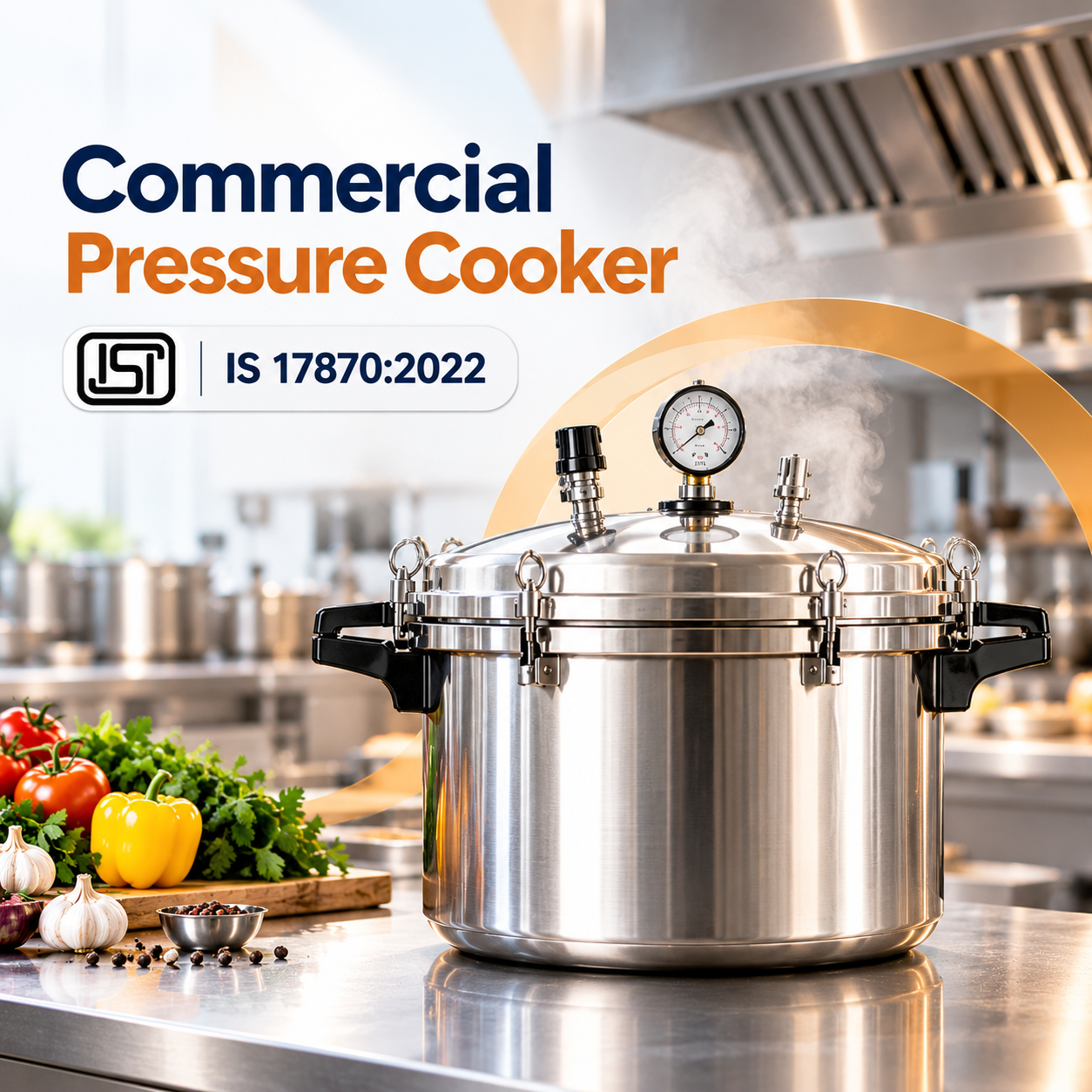
The proposed BIS Certification for Commercial Pressure Cookers could introduce a new compliance requirement for businesses operating in the Indian market. As per the draft order, the applicable Indian Standard is IS 17870:2022, Commercial Pressure Cooker — Specification. It also suggests use of the BIS Standard Mark under Scheme-I.
The proposal for BIS Certification for Commercial Pressure Cookers could affect manufacturers, exporters, importers and commercial kitchen equipment businesses.
It can also influence product testing, documentation, planning of production and market access. This development underscores the increasing significance of regulatory compliance in India for companies operating in regulated product categories.
What Would BIS Certification for Commercial Pressure Cookers Include?
The draft order suggests mandatory compliance for commercial pressure cookers with the relevant Indian Standard. The products covered must conform to IS 17870:2022 and must bear the Standard Mark under a BIS licence on Scheme-I.
The proposal identifies specifically:
Special | Proposed Mandatory Requirement |
Product | Commercial Pressure Cooker |
Indian Standard | IS 17870:2022 |
Title of the standard | Commercial Pressure Cooker — Specification |
Certification framework | Scheme-I |
Certification body |
The proposal also reflects the wider movement toward Mandatory Product Certification in India, particularly for products where safety and performance are important.
Importance of BIS Certification for Commercial Pressure Cookers and Safety
Commercial pressure cookers work at high temperatures and high internal pressure. Failure in construction, locking, material quality, or pressure control can lead to serious safety concerns.
These products are generally associated with commercial food preparation environments. They can be used for long periods of time and repeated operating cycles.
Some of the major concerns are:
- Pressure resistant
- Quality of material
- Lids and locking systems
- Performance of pressure relief
- Longevity of products
- Consistent manufacturing
- Overall safety performance
Product safety for businesses is more than simply the equipment. A product failure can also affect employees, customers, operations, reputation and commercial relationships.
Implications of the proposal for manufacturers and importers
The proposed framework could directly impact pressure cooker manufacturers and importers.
The manufacturers may have to verify the compatibility of their existing product specifications with the identified Indian Standard. Importers may also need further clarity on the compliance status of products sourced from overseas suppliers.
The business impact can be across multiple areas
Details
Regulatory expectations may evolve and impact product design and manufacturing specifications. Existing product lines may need a more careful review against the applicable standard.
Test & QA
Testing is an important consideration when a product enters a regulated certification framework. Another possible problem is consistency between tested products and commercially manufactured products.
Technical Document
Certification frameworks often contain technical information, product specifications, quality records, and supporting documentation. Hence, documentation can be an important part of regulatory oversight.
Production Planning
Implementation schedules can affect manufacturing and inventory decisions. They may also need to think about how existing stock fits into the proposed framework.
Understanding the Suggested Implementation Timeline
One of the unique features of the draft is that it envisages different periods of implementation for different categories of enterprises.
For general businesses, the proposed implementation period is six months from the publication in the e-Gazette. Small enterprises get nine months, and micro enterprises get twelve months.
That difference might matter for smaller businesses. It recognises that different types of enterprise may require different periods of time to adjust to the proposed regulatory framework.
Meanwhile, the document says that the latest version of the relevant Indian Standard, including amendments issued by BIS, would apply.
So changes to the applicable standard could affect the compliance landscape as well.
The Role of Product Certification in International Trade
Product certification is an essential part of international trade. Countries address safety, quality and consumer protection issues by using standards and conformity assessment systems.
For exporters, what’s required in one country is not automatically required in another market.
This can have an impact on:
- Acceptance of product
- Import planning
- Supplier relations
- Customer trust
- Technical documentation
- Timing of market entry
For instance, a foreign manufacturer selling commercial kitchen equipment to India may need to take Indian regulatory expectations into account in a different way from requirements in its home market.
So the wider debate on commercial pressure cooker BIS certification goes beyond domestic manufacture. It could also impact international supply chains and sourcing decisions.
The growing relevance of BIS certification services in India also reflects the increasing focus on regulated product access.
Risks of Exporting or Supplying Without Certification
Where certification is required, not meeting the applicable requirements can give rise to commercial and regulatory risks.
Possible concerns may include:
- Late market entry
- Problems with product acceptance
- More testing needed
- Disruption of supply chain
- Restrictions on inventory
- regulatory action
- Financial loss
- Brand image harm
The proposed order would appoint BIS as the certifying and enforcement authority. It also states that violation of the provisions would be punishable under the Bureau of Indian Standards Act, 2016.
But the precise obligations would depend on the final scope and language of the enforceable framework.
How Brand Trust and Compliance Are Affected
Certification can impact more than just regulatory status. It can also impact buyers’ perception of a product.
Commercial buyers want safety, reliability, durability and consistency in their kitchen equipment. “A well-established conformity framework can add confidence in products used in demanding conditions.”
Compliance can thus be part of a company’s overall reputation.
This is very relevant for manufacturers where products are supplied to hotels, restaurants, institutional kitchens, catering businesses and other commercial users.
The proposed development also underscores the growing importance of BIS compliance services for regulated product categories.
Common Business Challenges
There are many problems that can arise when mandatory certification is introduced.
Being Aware of the Applicable Standard
Businesses need clarity on the relevant product scope and technical requirements. Some added considerations can also arise from domestic vs. international specifications.
Existing Products Management
Companies with existing product ranges should consider the impact of new requirements on existing models, inventory and production plans.
Production Consistency Sustained
The sample tested shall represent the product manufactured for commercial sale. Therefore, differences in materials, components or the way of manufacture can be significant compliance issues.
Monitoring Regulatory Changes
New notifications, amendments and revised standards can lead to changes in regulatory requirements. Companies with operations in multiple product categories may find the compliance landscape increasingly complex.
A BIS certification consultant may also be relevant when businesses assess changing standards and certification requirements.
Other Provisions in the Proposed Framework
The draft also has certain specific provisions.
The proposed order would exclude products manufactured at home for export. It also provides for exemption of up to 200 units imported/year for research and development, subject to specified conditions. Such products cannot be marketed in commerce.
The proposal also makes provision for some existing stock. Products manufactured or imported before the commencement date would be permitted to be sold or displayed for six months, subject to conditions set out in the draft.
These provisions show that the proposed framework is not limited to certification only. It also takes into account exports, research activities, existing inventory and different enterprise categories.
BIS Certification for Commercial Pressure Cookers: Impact on Businesses
Commercial pressure cookers are part of a bigger commercial food-service ecosystem. Any regulatory change that impacts these products can have an impact beyond individual manufacturers.
It can be linked to Restaurants, Hotels, Catering Businesses, Food Processors, Institutional Kitchens, Distributors and Importers.
As regulatory expectations change, companies may therefore pay more attention to:
Product compliance
Specifications of suppliers
Test data
Certification status
Traceability of products
Paperwork for regulatory purposes
Availability in the market
This wider business impact makes the proposed BIS Certification for Commercial Pressure Cookers requirement relevant to both manufacturers and downstream commercial users.
Conclusion
The mandatory certification of commercial pressure cookers is part of efforts to improve the product safety framework in India. The draft specifies IS 17870:2022 as the standard and proposes varying timelines for implementation for general, small and micro enterprises.
If implemented, the framework could affect product specifications, testing, documentation, production planning, imports and market access. It may also reinforce the role of conformity of products in commercial kitchen equipment.
Businesses should also be aware of the difference between the current proposal and a final enforceable requirement. The final regulatory position will set out the exact obligations, timing and conditions that apply.
ERA Global Standards Certification includes regulatory developments related to product standards, certification requirements and market access frameworks. For more details, visit www.eraglobal.co.in/contact.