
Understanding Bus Body Certification Requirements Under AIS-052 for Manufacturers and Bus Body Builders
A bus may be structurally complete and still face approval challenges if its body does not meet applicable regulatory requirements. AIS-052 Bus Body Certification plays an important role in the design, testing, and approval framework for bus bodies in India. AIS-052 (Rev.1) is the Code of Practice for Bus Body Design and Approval. It covers areas such as bus body design, technical and safety requirements, lighting, electrical systems, testing, and type approval.
For manufacturers and bus body builders, compliance is therefore not limited to fabrication quality. Design decisions, structural features, safety systems, technical documents, and testing can all influence the approval process. Understanding these requirements can help businesses recognise compliance risks before they affect production, testing, or market entry.
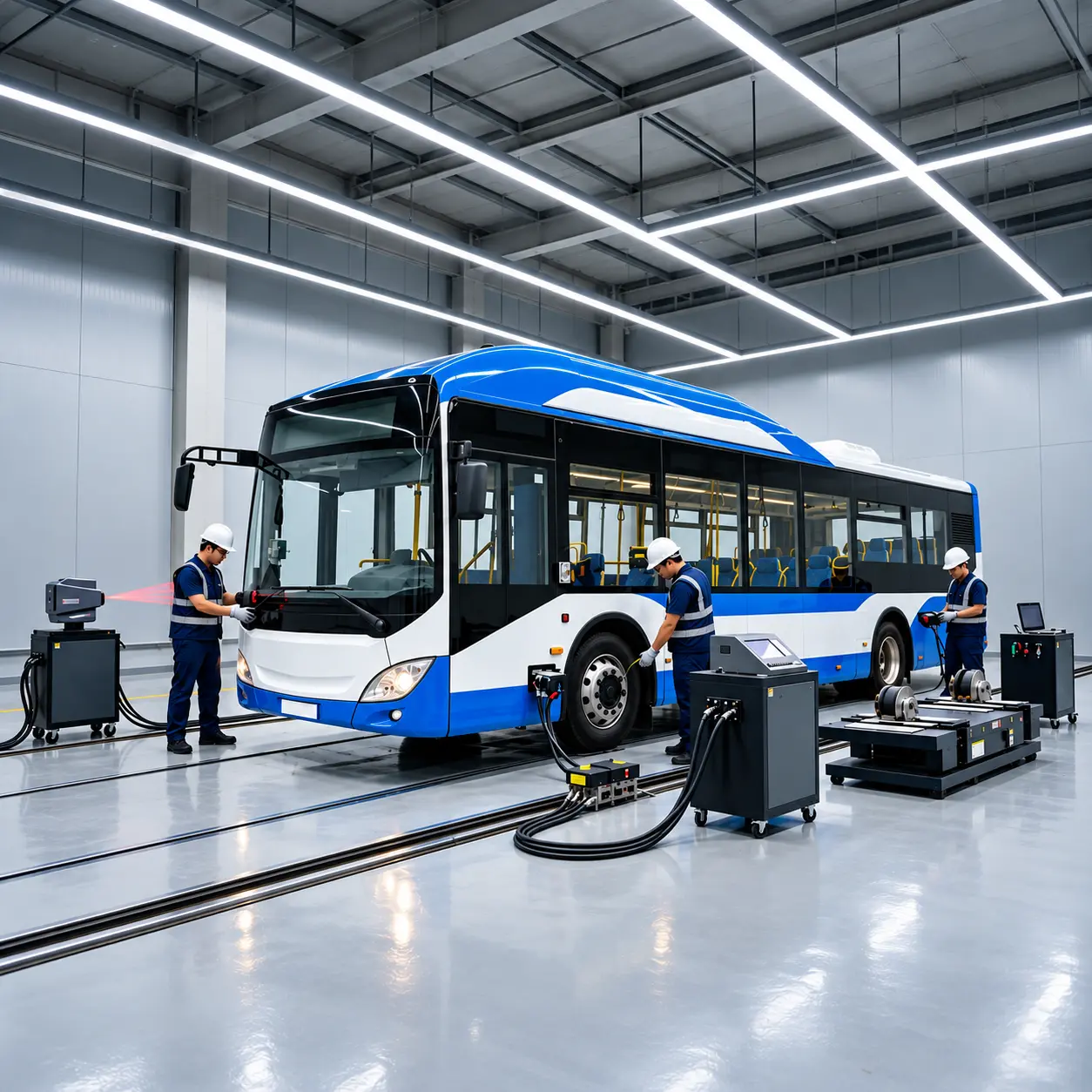
Why Bus Body Certification Matters in India
Bus Body Certification in India forms part of the wider regulatory environment governing vehicle construction and approval. A bus body must satisfy applicable technical and safety provisions before the relevant approval can be established.
AIS-052 provides a framework for bus body design and approval. It also specifies methods for establishing compliance. Depending on the applicable provision, compliance may involve technical specification checks, fitment verification, or testing.
The importance of certification extends beyond regulatory approval. Non-compliance can create wider business consequences, including:
- Delays during testing and approval
- Additional engineering changes
- Repeated technical submissions
- Higher development costs
- Production planning disruptions
- Challenges in maintaining regulatory conformity
Therefore, manufacturers need to consider compliance as part of product development rather than as a separate activity.
Understanding AIS-052 Certification Requirements
The AIS-052 certification requirements cover several technical areas related to bus body construction and safety. The official AIS-052 document includes separate chapters for general bus body design, technical and safety requirements, lighting and illumination, electrical equipment and wiring, test methods, and type approval procedures.
These requirements can affect different parts of a bus body, including:
- Body structure and construction
- Passenger areas
- Seating and seat mounting
- Doors and emergency exits
- Windows and related systems
- Lighting and signalling
- Electrical equipment and wiring
- Safety-related components
- Vehicle dimensions and layout
The exact compliance requirements can vary according to the vehicle and applicable regulatory provisions. For this reason, manufacturers should not treat every bus project as technically identical.
AIS-052 Certification Process and Technical Evaluation
The AIS-052 certification process involves technical information, documentation, inspection, testing, and approval activities. AIS-052 specifies that a type approval application can be submitted by the vehicle manufacturer or bus body builder. The application includes information such as technical specifications and relevant compliance evidence.
Technical evaluation can involve different forms of compliance verification. These may include document-based assessment, physical checks, and testing.
The standard also recognises situations where a bus body builder adopts a type-tested design supplied by a chassis manufacturer. In such cases, relevant chassis details and drawings may need to be provided for consideration by the testing agency.
This highlights why coordination between vehicle manufacturers, chassis suppliers, and body builders can influence the approval process.
Bus Body Design Approval and Engineering Considerations
Bus Body Design Approval is closely connected with the technical design of the body. A design that looks suitable from a manufacturing perspective may still require further evaluation against applicable regulatory provisions.
The AIS-052 framework addresses general design as well as technical and safety requirements. ARAI also identifies areas such as bus superstructure strength and bus stability as part of its technical evaluation capabilities.
For manufacturers, design-stage compliance can therefore influence:
- Structural integrity
- Passenger protection
- Vehicle stability
- Emergency arrangements
- Seating configuration
- Interior and exterior installations
- Electrical system integration
Additionally, changes made after testing can affect previously assessed configurations. This makes design consistency an important consideration throughout vehicle development.
What Does Bus Body Testing Cover?
Bus Body Testing provides an important method for establishing compliance with applicable requirements. ARAI currently lists bus body testing and clearance under AIS-052 (Rev.1) and AIS-153 as part of its vehicle installation testing activities.
The AIS-052 testing requirements can involve multiple technical areas. Depending on the applicable configuration and provisions, assessments may include:
- Structural strength
- Vehicle stability
- Seat anchorage
- Emergency exits
- Window-related requirements
- Lighting and signalling
- Interior fittings
- Electrical installations
- Dimensional verification
ARAI’s published AIS-052 test reference also identifies physical bus-code verification, stability testing, seat-related assessments, window retention, lighting, interior fittings, and other vehicle-level checks.
Testing observations can affect development timelines when the tested configuration differs from the submitted technical information or applicable requirements.
Bus Body Type Approval and CMVR Compliance
Bus Body Type Approval establishes compliance for the relevant vehicle or body configuration through the applicable approval framework. AIS-052 contains a dedicated chapter covering type approval and conformity-of-production procedures.
The relationship between AIS requirements and CMVR compliance for buses is therefore important for manufacturers. ARAI describes bus body construction as part of its CMVR-type approval activities, while its bus body certification information specifically supports bus body builders involved in CMVR Type Approval.
The regulatory framework can also involve additional standards for particular bus categories. For example, ARAI has highlighted AIS-153 for buses exceeding 22 passengers excluding the driver, along with separate standards for areas such as sleeper and school buses.
Consequently, identifying the applicable regulatory requirements is important when developing or modifying a bus body.
Bus Body Homologation and Regulatory Coordination
Bus Body Homologation involves demonstrating that the relevant vehicle or body configuration meets applicable regulatory requirements. It connects engineering decisions with testing, documentation, and regulatory approval.
The process can involve several stakeholders, including manufacturers, bus body builders, testing agencies, and regulatory authorities. ARAI lists bus body construction among its homologation activities and provides technical consultation related to bus and other body codes.
For manufacturers, coordination becomes particularly important when a project includes:
- A new bus body design
- Structural modifications
- New seating arrangements
- Changes to safety-related components
- Different vehicle variants
- Special-purpose bus configurations
Each change can create questions about whether existing technical evidence remains applicable.
Business Impact of AIS-052 Compliance
Compliance affects more than regulatory approval. It can influence product development, manufacturing schedules, investment decisions, and market credibility.
For manufacturers, consistent compliance can support:
- Better control over development risks
- More predictable testing activities
- Reduced uncertainty during approval
- Stronger technical documentation
- Improved confidence among customers and stakeholders
Moreover, compliance can support the broader perception of a manufacturer’s commitment to vehicle safety and regulatory responsibility.
For companies operating in competitive transport markets, regulatory credibility can become an important part of long-term business relationships.
Role of a Bus Body Certification Consultant
A bus body certification consultant can provide technical and regulatory support during projects involving design assessment, documentation, testing coordination, and approval activities.
The value of such support often relates to understanding how engineering decisions connect with regulatory requirements. It can also help manufacturers manage communication between technical teams and testing agencies.
ERA Global Standards Certification provides technical consulting related to AIS-052 compliance, bus body design validation, documentation, testing coordination, and homologation. Its service scope reflects the broader technical nature of bus body approval rather than treating certification as a single documentation activity.
The Importance of Compliance in Modern Bus Manufacturing
Bus manufacturing continues to involve increasingly complex technical and safety considerations. As regulatory expectations develop, manufacturers and body builders must consider compliance throughout vehicle development.
AIS-052 provides an established framework for bus body design and approval. However, applicable requirements can extend beyond a single standard. Vehicle category, passenger capacity, design characteristics, and related regulatory provisions can influence the compliance landscape.
For manufacturers, awareness of these requirements is therefore essential. Strong technical coordination, accurate information, appropriate testing, and consistent vehicle configurations all contribute to a more controlled approval environment.
Conclusion
AIS-052 Bus Body Certification is an important part of the regulatory framework for bus body design and approval in India. It connects structural design, safety requirements, technical documentation, testing, and type approval within a defined compliance framework.
For bus manufacturers and body builders, understanding these requirements can help identify potential regulatory and business risks early. As bus technologies, vehicle configurations, and regulatory expectations continue to evolve, compliance awareness will remain an important part of responsible vehicle development.