
BIS Certification Updates Reshaping India’s Bearing Industry: What Manufacturers and Importers Need to Know
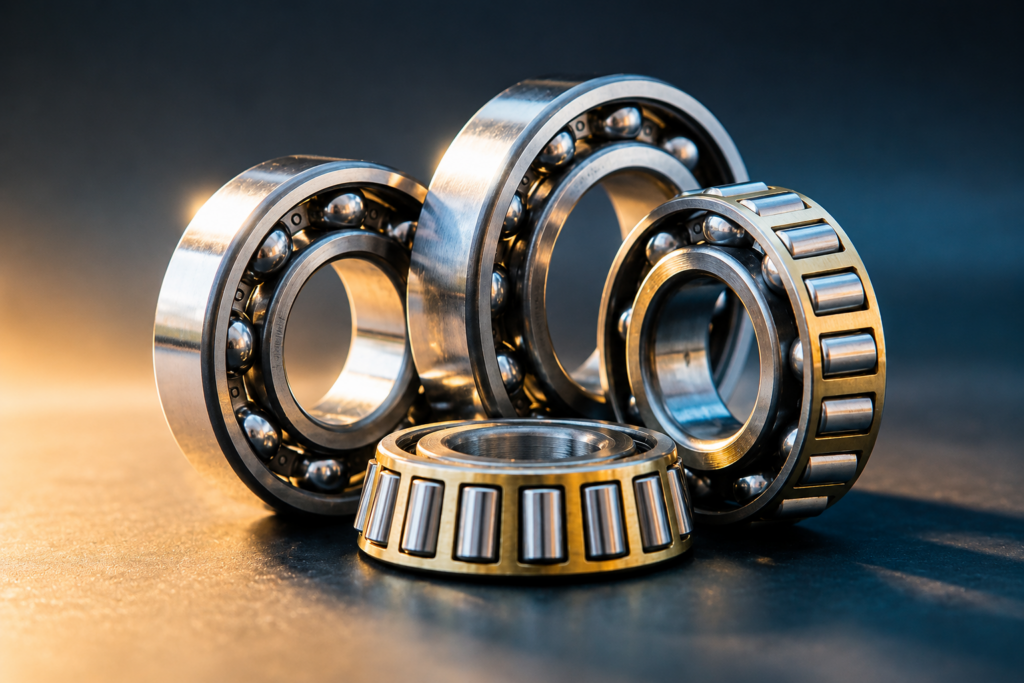
Bearings are essential mechanical components that reduce friction between moving parts and ensure smooth, efficient machine operation. They play a critical role across industries such as automotive, industrial machinery, railways, aerospace, infrastructure, construction equipment, and electric vehicles (EVs).
India is currently one of the fastest-growing bearing markets globally. The Indian bearing industry is expected to reach approximately USD 5.2 billion in 2025 and is projected to grow to nearly USD 12 billion by 2034. This rapid expansion is being driven by increasing industrialization, infrastructure development, automation, and rising demand for precision engineering components.
Several major sectors are contributing to this growth:
-
Rapid expansion of the automotive industry
-
Increasing demand for industrial machinery and automation
-
Growth in railway and metro infrastructure projects
-
Large-scale infrastructure and construction development
-
Rise of electric vehicles (EVs) and e-mobility
-
Adoption of robotics and smart manufacturing technologies
-
Expansion of manufacturing under the “Make in India” initiative
-
Growing demand for high-performance and precision bearings
-
Increase in exports and industrial production capacity
-
Rising investments in heavy engineering and industrial equipment
As the bearing industry continues to grow, maintaining product quality, operational reliability, and industrial safety has become increasingly important. Even small defects in bearing products can impact machine performance, increase operational risks, and lead to costly equipment failures.
To strengthen quality standards and regulate the market more effectively, the Ministry of Commerce and Industry, in coordination with the Department for Promotion of Industry and Internal Trade (DPIIT), has proposed the Bearing (Quality Control) Order, 2025, under the provisions of the BIS Act, 2016.
The proposed Bearing QCO has been introduced after consultation with Bureau of Indian Standards (BIS) to improve product quality, safety, and standardization of bearings sold in the Indian market.
Under the proposed regulations, BIS certification for bearings may become mandatory for specified bearing products, bearing components, and accessories manufactured, imported, or sold in India. The proposed order is expected to significantly impact bearing manufacturers in India, importers, suppliers, distributors, and industrial businesses dealing with bearing products.
The latest bearing industry BIS updates clearly indicate the government’s growing focus on strengthening industrial quality standards, reducing substandard products, and building a more reliable manufacturing ecosystem in India.
Growing Importance of BIS Certification for Bearings
Bearings are used in critical industrial applications where product reliability directly affects machinery performance, safety, and operational efficiency. Poor-quality bearings can result in equipment damage, production downtime, increased maintenance costs, and safety concerns.
To address these issues, the Government of India has introduced draft Quality Control Orders (QCOs) covering various bearing products, bearing components, and accessories. The objective behind these proposed regulations is to ensure that only standardized and quality-tested products are supplied in the Indian market.
Under the proposed framework:
-
Bearing products must comply with applicable Indian Standards (IS Standards)
-
Products must carry the BIS Standard Mark (ISI Mark)
-
Manufacturers and importers must obtain valid BIS licenses
-
Non-compliant products may face restrictions on manufacturing, import, sale, and distribution
These updates are expected to impact both domestic and foreign manufacturers supplying bearing products to India.
Understanding the Bearing QCO, 2025
The Bearing (Quality Control) Order, 2025, is a proposed regulatory framework introduced to strengthen quality control within the Indian bearing industry.
The proposed Quality Control Order for bearings aims to:
-
Improve product quality and reliability
-
Eliminate substandard products from the market
-
Protect consumer and industrial safety
-
Promote standardized manufacturing practices
-
Support high-quality domestic manufacturing
The proposed Bearing QCO is part of India’s broader industrial quality improvement strategy aligned with initiatives such as “Make in India” and “Atmanirbhar Bharat.”
Key Changes Introduced Under the Bearing QCO
The proposed Bearings (Quality Control) Order, 2025, introduces several major regulatory changes for the Indian bearing sector. These updates are expected to significantly affect manufacturers, importers, suppliers, traders, and industrial buyers dealing with bearing products and bearing components in India.
Mandatory BIS Certification for Bearings
One of the biggest changes under the new Quality Control Order for bearings is the proposed mandatory BIS certification requirement for several bearing categories.
Under the draft regulations:
-
Bearing products may require BIS certification before being sold in India
-
Manufacturers may need valid BIS licenses
-
Products may need to comply with applicable IS Standards
-
Certified products may require the ISI Mark
This move is aimed at improving product quality, industrial safety, standardization, and reliability of bearing products.
Coverage of Multiple Bearing Categories
Earlier, many bearing products operated without mandatory quality compliance requirements. However, under the proposed Bearing QCO, several bearing categories have been included for compulsory certification.
Inclusion of Bearing Components and Accessories
Apart from finished bearing products, the government has also proposed a separate draft QCO for bearing components and accessories. This development highlights the government’s focus on improving quality standards throughout the complete bearing supply chain rather than regulating only finished products.
Products and Standards Covered Under the Draft QCO
Bearing Products Covered
The draft Bearings (Quality Control) Order, 2025, currently covers 12 bearing product categories. These bearing categories are widely used across automotive, railway, industrial machinery, engineering, and heavy equipment sectors.
Table
| Bearing Product | Applicable Standard |
|---|---|
| Tapered Roller Bearings | IS 12102:1987 |
| Self-Aligning Roller Bearings | IS 6454:1972 |
| Single Row Deep Groove Ball Bearings | IS 6455:2020 |
| Double Row Radial Ball Bearings | IS 6456:1972 |
| Single Row Cylindrical Roller Bearings | IS 6457:2024 |
| Double Row Cylindrical Roller Bearings | IS 6458:1972 |
| Thin-Walled Plain Bearings | IS 10203:1982 |
| Thick-Walled Bushes, Plain and Flange Type | IS 14478:1997 |
| Ring Type Needle Bearings | IS 4215:1983 |
| Plain Bearings Ring Type Thrust Washers Made from Strip | IS 9764 (Part 1):2022 |
| Pressed Bimetallic Half Thrust Washers | IS 9764 (Part 2):2022 |
| Porous Metal Powder Oil Impregnated Bearings | IS 3980:1982 |
Bearing Components and Accessories Covered
Separate draft regulations cover multiple bearing components and accessories.
Table
| Bearing Components and Accessories | Applicable Standard |
|---|---|
| Steel Balls for Rolling Bearings | IS 2898 (Part 1):2019 |
| Ceramic Balls for Rolling Bearings | IS 2898 (Part 2):2019 |
| Cylindrical Rollers for Rolling Bearings | IS 9202:2020 |
| Needle Rollers for Rolling Bearings | IS 4217:2020 |
| Bicycle Balls | IS 15184:2002 |
| Adapter Sleeve Assemblies and Withdrawal Sleeves | IS 16605 (Part 1):2018 |
| Locknuts and Locking Devices | IS 16605 (Part 2):2018 |
| Plummer Block Housings | IS 14347:1996 |
Proposed Implementation Timeline
According to the draft notifications, the proposed implementation timelines are expected to vary based on enterprise category. This phased implementation approach aims to provide MSMEs with additional time for compliance preparation.
Table
| Business Type | Proposed Timeline |
|---|---|
| General Industries | 6 Months |
| Small Enterprises | 9 Months |
| Micro Enterprises | 12 Months |
Impact on the Bearing Industry
The latest bearing industry BIS updates are expected to significantly affect both Indian manufacturers and foreign businesses supplying bearing products to India.
Impact on Indian Manufacturers
Bearing manufacturers in India may need to:
-
Upgrade product testing systems
-
Align products with applicable Indian Standards
-
Apply for BIS certification and licensing
-
Maintain technical and quality documentation
-
Ensure production quality consistency
-
Strengthen internal quality control systems
Manufacturers that proactively prepare for compliance may gain a competitive advantage in the long term.
Impact on Importers and Foreign Manufacturers
Importers and overseas manufacturers may also face stricter compliance requirements once the QCO becomes mandatory.
Potential challenges may include:
-
Port clearance issues for non-compliant products
-
Additional compliance documentation
-
Product testing requirements
-
Delays in product approvals and market entry
-
BIS certification requirements for imported bearing products
Foreign manufacturers exporting bearings to India may also require BIS certification under applicable BIS schemes.
Why These BIS Updates Matter for the Industry
The proposed BIS certification for bearing products is expected to create major improvements across the industrial supply chain.
Improved Product Quality: The new regulations may significantly reduce the circulation of low-quality bearing products in the Indian market.
Better Industrial Safety: Industries such as automotive, railways, heavy engineering, and industrial manufacturing rely heavily on reliable bearing systems for safe operations.
Reduction in Substandard Imports: The proposed Quality Control Order for bearings may help regulate the entry of low-cost, non-compliant imported products.
Stronger Indian Manufacturing Ecosystem: Standardization and compliance-driven manufacturing can improve India’s industrial competitiveness and global manufacturing reputation.
Challenges Businesses May Face
Although the proposed regulations aim to improve quality standards, businesses may still experience several compliance-related challenges, including:
-
Testing delays
-
Technical documentation complexity
-
Factory audit preparation
-
Compliance costs
-
Understanding applicable Indian Standards
-
Managing certification timelines
-
Coordinating with BIS authorities
These challenges are especially common among MSMEs and first-time applicants unfamiliar with BIS procedures.
Exemptions Mentioned in the Draft Notifications
The draft notifications also mention certain proposed exemptions.
R&D Import Exemption: Manufacturers may be allowed to import up to 200 units annually for research and development purposes under specified conditions.
Export Exemption: Products manufactured domestically exclusively for export purposes may not fall under the mandatory BIS certification requirement.
How Businesses Should Prepare for BIS Certification
Even though the Bearing QCO is currently in the draft stage, businesses should begin preparing proactively to avoid future compliance issues.
Companies should focus on:
-
Identifying applicable IS Standards
-
Reviewing product specifications
-
Strengthening internal quality systems
-
Maintaining technical documentation
-
Preparing for product testing and factory inspections
-
Understanding BIS licensing requirements
Early preparation can help businesses avoid delays once the final Quality Control Order for bearings is officially implemented.
How ERA Global Supports Bearing Manufacturers with BIS Certification
ERA Global Standards Certification is a technical compliance and BIS certification consultancy that assists manufacturers, importers, and industrial businesses with end-to-end regulatory support.
ERA Global provides:
-
BIS certification consultancy
-
Technical documentation assistance
-
Product testing coordination
-
Factory audit preparation
-
BIS application filing support
-
Compliance management assistance
-
Guidance for foreign manufacturers
-
BIS Coordination Assistance
With technical expertise and regulatory knowledge, ERA Global helps businesses simplify the BIS certification process and reduce compliance-related delays.
Frequently Asked Questions (FAQs)
Is BIS certification for bearings mandatory now?
No. The current notifications are draft QCOs and have not yet been finalized for mandatory implementation.
Which bearing products are covered under the draft QCO?
The draft notification currently covers 12 bearing product categories including roller bearings, ball bearings, cylindrical bearings, needle bearings, and plain bearings.
Are bearing components and accessories also covered?
Yes. Separate draft regulations cover multiple bearing components and accessories including steel balls, rollers, sleeves, locknuts, and plummer block housings.
Who will enforce the certification requirements?
Bureau of Indian Standards (BIS) will act as the certifying and enforcement authority.
Who will be affected?
The proposed regulations will impact:
-
Indian manufacturers
-
Foreign manufacturers
-
Importers
-
Authorized Indian Representatives (AIRs)
-
Distributors and suppliers
-
OEM manufacturers
-
Industrial procurement teams
Will imported bearings require BIS certification?
Once the regulations are finalized and implemented, applicable imported bearing products may also require mandatory BIS certification before being sold in India.
Key Compliance Risks of Delayed Preparation
Organizations that postpone compliance planning may encounter:
-
Product launch delays
-
Supply chain disruptions
-
Testing bottlenecks
-
Documentation deficiencies
-
Factory audit readiness issues
-
Increased compliance costs
Companies should focus on:
-
Identifying applicable Indian Standards
-
Conducting an initial compliance gap assessment
-
Reviewing product specifications and technical documentation
-
Strengthening quality management systems
-
Evaluating testing readiness
-
Preparing for certification audits and inspections
-
Understanding BIS licensing requirements
Conclusion
India’s bearing industry is entering a new regulatory phase focused on quality, safety, and standardization. While the proposed Quality Control Orders (QCOs) and BIS certification requirements are still in the draft stage and have not yet been formally implemented, they clearly indicate the government’s direction toward stronger compliance enforcement for industrial products.
Manufacturers, importers, and suppliers that assess their compliance readiness and begin preparing today will be better positioned to adapt to future regulatory developments, reduce implementation risks, maintain uninterrupted market access, and gain a competitive advantage.
Understanding the scope of the proposed BIS certification requirements now can help businesses strengthen product quality, improve operational readiness, and build long-term competitiveness in an increasingly compliance-driven market.
Need guidance on the proposed Bearing QCO or BIS certification requirements? Contact ERA Global’s compliance experts today to assess your readiness and prepare for future regulatory requirements.