
Test Procedure of Islanding Prevention Measures for Utility-Interconnected Photovoltaic Inverters
Utility-Interconnected Photovoltaic Inverters – Islanding Prevention Test Procedure
Strategic Recommendations for Utility-Interconnected PV Inverters – IS 16270
- Apply for BIS CRS Registration
Ensure photovoltaic inverters are tested as per IS 16270 and certified before manufacture, import, or sale in India. - Collaborate with Compliance Experts
Engage ERA Global experts for BIS CRS filing, test lab coordination, technical documentation, and MNRE compliance support. - Contact ERA Support Team
📧 cs@eraglobal.co.in | 📞 +91 9599296331 | 💬 WhatsApp – For CRS registration, testing assistance, and regulatory guidance. - Track Notifications & Amendments
Subscribe to Stay updated via ERA Regulatory Newsletter on CRS amendments, BIS standard revisions, and MNRE circulars affecting crystalline silicon PV modules. - Conduct Gap Assessment
Assess inverter designs against IS 16270 requirements, focusing on islanding detection logic, disconnection time, and certification readiness.
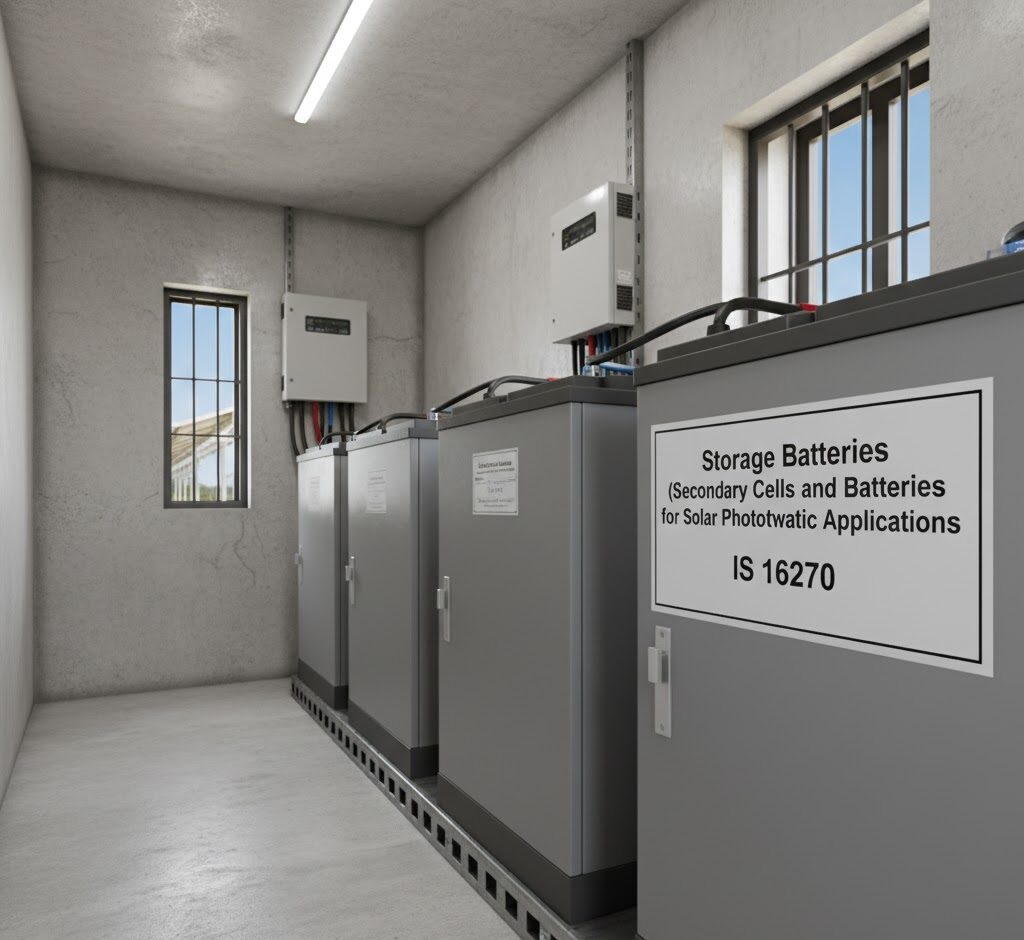
| Section | Details |
|---|---|
| Product Name | Utility-Interconnected Photovoltaic Inverters – Islanding Prevention Test Procedure |
| Applicable Indian Standard (IS) No. | IS 16270 |
| Title of Indian Standard | Test Procedure of Islanding Prevention Measures for Utility-Interconnected Photovoltaic Inverters |
| Quality Control Order | Solar Systems, Devices and Components Goods (Requirements for Compulsory Registration) Order, 2025 under the BIS Act, 2016 |
| Notification & Amendments | S.O. 492(E), dated 27th January 2025, as amended by S.O. 3597(E), dated 05th August 2025 |
| Final Enforcement Date | 30 June 2026 |
| Objective & Scope | To ensure safe disconnection of utility-interconnected photovoltaic inverters during grid failure, preventing unintentional islanding and safeguarding personnel, equipment, and grid stability. |
| Products Covered | All utility-interconnected photovoltaic inverters required to demonstrate compliance with islanding prevention measures as part of grid safety requirements. |
| Exemptions | - Inverters manufactured exclusively for export - Units imported for R&D, testing, or demonstration purposes (to be scrapped or re-exported) |
| Industries Impacted | - PV inverter manufacturers and importers - Solar EPC companies and project developers - Grid-connected solar system integrators - Renewable energy distributors |
| Mandatory Compliance | - Compliance with IS 16270 test procedures - BIS CRS registration mandatory where applicable - Successful demonstration of anti-islanding performance |
| Testing Parameters | - Active and passive islanding detection tests - Grid voltage and frequency variation tests - Disconnection time verification - Functional safety validation under simulated grid-failure conditions |
| Certification & Enforcement Authority | Bureau of Indian Standards (BIS) – certification authority, with implementation support from MNRE and designated enforcement agencies. |
| Penalties for Non-Compliance | Non-compliance may result in cancellation of registration, seizure of non-conforming goods, financial penalties, and legal action under the BIS Act, 2016. |
| Conclusion | Compliance with IS 16270 is essential to ensure grid safety and reliable operation of utility-interconnected photovoltaic inverters in India. |
Ready to start your certification journey?
Let us help you navigate regulatory challenges and achieve certification with ease. Leave us your details, and we’ll get back to you—or request a free consultation today.
Get in touch with us today
Notification
IS 16270 is covered under the Solar Systems, Devices and Components Goods (Requirements for Compulsory Registration) Order, 2025, notified vide S.O. 492(E) dated 27th January 2025, as amended by S.O. 3597(E) dated 05th August 2025.
Overview
Utility-interconnected photovoltaic inverters must disconnect automatically from the grid during outages to prevent islanding conditions. IS 16270 prescribes standardized test procedures to verify the effectiveness of islanding prevention mechanisms, ensuring protection of utility personnel, grid infrastructure, and connected electrical equipment.
Objective & Scope
The objective of IS 16270 is to ensure photovoltaic inverters reliably detect grid failure and cease power export within prescribed time limits. The scope includes laboratory-based testing under simulated grid-abnormal conditions to verify safety and functional performance.
Products Covered
- Utility-interconnected photovoltaic inverters
- Grid-tied solar inverters requiring anti-islanding verification
- Inverter models forming part of certified solar PV systems
Exemptions Provided
- Inverters manufactured exclusively for export
- Units imported solely for R&D, testing, or demonstration purposes, subject to applicable conditions
Industries Impacted
- Solar inverter manufacturers and importers
- Solar EPC companies and project developers
- Grid-connected solar system integrators
- Renewable energy distributors
Mandatory Compliance Requirements
All applicable photovoltaic inverters marketed in India must:
- Comply with IS 16270 testing requirements
- Obtain BIS CRS registration where notified
- Demonstrate effective islanding prevention performance
Enforcement Timeline
Effective from 30 June 2026 as per the Solar Systems, Devices and Components Goods Order, 2025 read with the latest MNRE amendment.
Legal Provisions, Enforcement & Penalties
The order is enforced under the BIS Act, 2016, with monitoring by BIS and MNRE. Violations may lead to cancellation of registration, seizure of products, financial penalties, and prosecution as per law.
Conclusion
IS 16270 establishes a critical safety benchmark for utility-interconnected photovoltaic inverters in India. Compliance ensures effective islanding prevention, grid safety, and regulatory conformity under the MNRE Solar QCO framework.
Ready to start your certification journey?
Let us help you navigate regulatory challenges and achieve certification with ease. Leave us your details, and we’ll get back to you—or request a free consultation today.