
Safety of Household, Commercial and Similar Electrical Appliances
Commercial Electric Forced Convection Ovens, Steam Cookers and Steam-Convection Ovens
Strategic Recommendations for Commercial Electric Forced Convection Ovens, Steam Cookers and Steam–Convection Ovens — IS 302 (Part 1): 2024
Start BIS Certification in Advance of Deadlines
Manufacturers and importers should initiate BIS certification under Scheme-I well before the phased enforcement dates (1 October 2026 / 1 January 2027 / 1 April 2027) to accommodate testing, inspection, and approval timelines.
Engage ERA Compliance Experts
ERA’s compliance team provides end-to-end support for BIS certification, including application filing, coordination with BIS-recognised laboratories, factory audit readiness, corrective action support, and ISI marking approval to ensure smooth and timely compliance.
Reach Out for Support
For product eligibility checks, documentation guidance, and certification timelines, stakeholders may directly connect with ERA’s compliance team.
📧 cs@eraglobal.co.in | 📞 +91 9599296331 | 💬 WhatsApp Support Available
Track Gazette Notifications and Amendments
Stay updated on future Government notifications, BIS amendments, and enforcement changes by regularly tracking Gazette publications and subscribing to the ERA Newsletter for timely regulatory alerts and compliance updates.
Ensure ISI Marking and Product Compliance Control
Only BIS-certified appliances conforming to IS 302 (Part 1): 2024 and bearing the ISI Mark should be manufactured, imported, or sold in India. Non-certified or transitional stock must be strictly segregated and managed as per notified provisions.
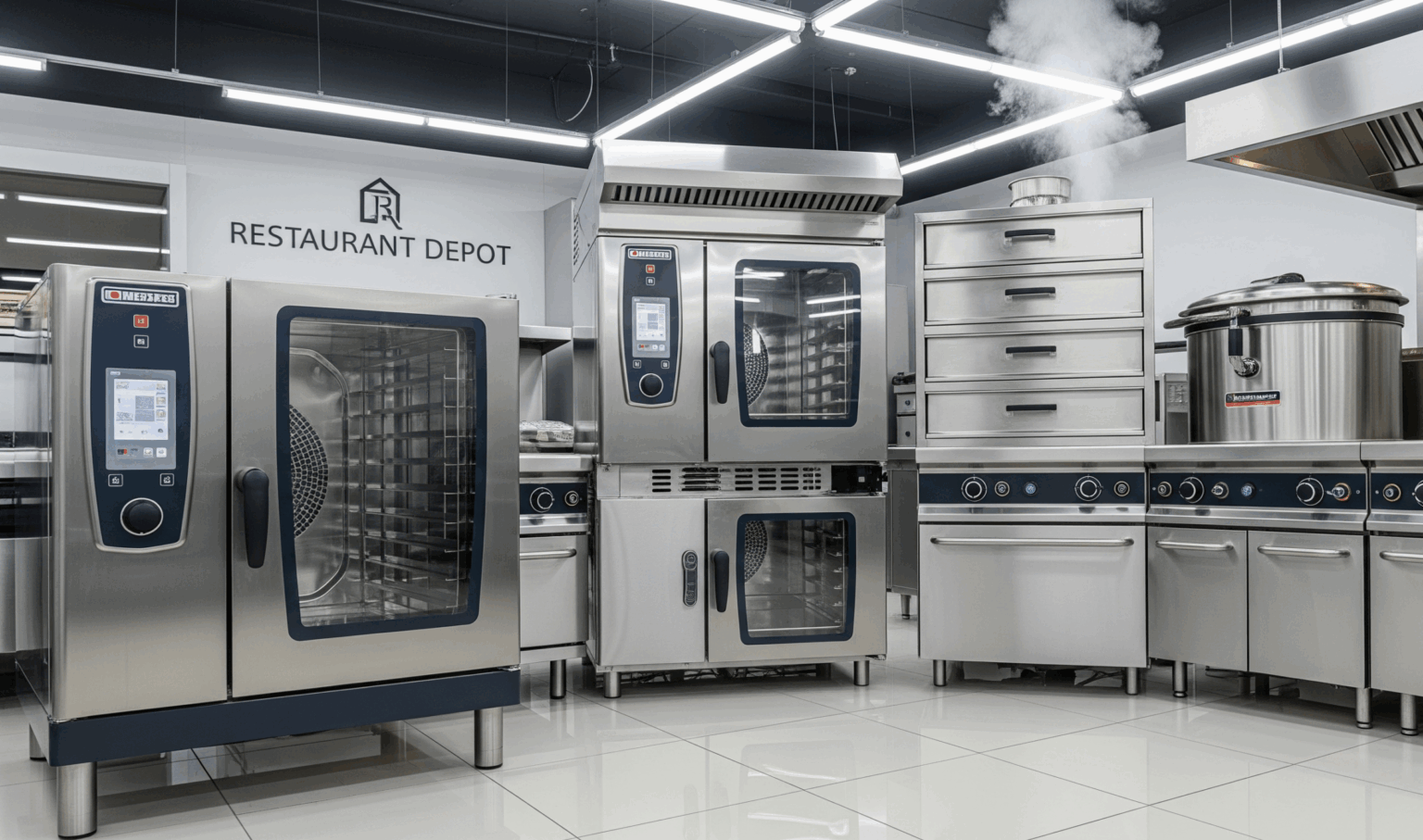
| Section | Details |
|---|---|
| Product Name | Commercial Electric Forced Convection Ovens, Steam Cookers and Steam–Convection Ovens. |
| Applicable Indian Standard (IS) No. | IS 302 (Part 1): 2024 / IEC 60335-1: 2020. |
| Title of Indian Standard | Household and Similar Electrical Appliances — Safety, Part 1: General Requirements. |
| Notification & Amendments | Covered under Safety of Household, Commercial and Similar Electrical Appliances (Quality Control) Order, 2026 – S.O. 1739(E), dated 6 April 2026, issued by DPIIT, Ministry of Commerce and Industry; supersedes Safety of Household, Commercial and Similar Electrical Appliances (Quality Control) Order, 2025. |
| Implementation Dates (Category-wise) | General Enterprises: 1 October 2026; Small Enterprises: 1 January 2027; Micro Enterprises: 1 April 2027. |
| Objective & Scope | To ensure electrical safety, performance reliability, and protection against hazards such as electric shock, overheating, fire, and mechanical risks in commercial cooking appliances used in food service environments. The scope covers appliances operating within prescribed voltage limits used in commercial kitchens and similar establishments. |
| Products Covered | Commercial electric forced convection ovens, steam cookers, and steam–convection ovens used in hotels, restaurants, catering units, institutional kitchens, and food processing environments. |
| Exemptions | Products manufactured exclusively for export; up to 200 units per year imported for R&D (non-commercial use); declared pre-implementation stock allowed for sale up to six months subject to declaration; products covered under other QCOs excluded. |
| Special Coverage | Includes appliances operating on AC, DC supply, and battery-operated systems within voltage limits (≤250V single phase and ≤480V for others); applies to both household-type and commercial-grade appliances used in similar environments. |
| Industries Impacted | Commercial kitchen equipment manufacturers, hospitality equipment suppliers, importers, distributors, OEMs, cloud kitchen operators, institutional food service providers, and e-commerce platforms. |
| Mandatory Compliance | Products must conform to IS 302 (Part 1): 2024 and bear the ISI Mark under BIS licence (Scheme-I) prior to manufacture, import, sale, or distribution in India. |
| Next Steps for Stakeholders | Identify applicable models; conduct product testing through BIS-recognised labs; align design and safety requirements; apply for BIS licence; complete factory inspection; ensure ISI marking and compliance before enforcement deadlines. |
| Certification, Enforcement & Legal Provision | Certification and enforcement carried out by BIS under Sections 16, 17, and 25(3) of the BIS Act, 2016, along with BIS (Conformity Assessment) Regulations, 2018 (Scheme-I). |
| Penalties for Non-Compliance | Non-compliance may lead to: (1) imprisonment up to two years; (2) monetary fine starting from ₹2 lakh and extending up to ten times the value of goods; (3) additional penalties for continuing violations including seizure or recall of non-compliant products. |
| Amendment Clause | The latest version of IS 302 (Part 1), including amendments notified by BIS from time to time, applies automatically from the date of such notification. |
| Conclusion | BIS certification is mandatory for commercial electric cooking appliances under the 2026 QCO. Early compliance is critical to ensure uninterrupted operations and avoid enforcement risks. |
| References/Annexures | BIS Act, 2016; BIS (Conformity Assessment) Regulations, 2018; S.O. 1739(E) dated 6 April 2026; IS 302 (Part 1): 2024 |
Notification
Commercial Electric Forced Convection Ovens, Steam Cookers and Steam–Convection Ovens have been brought under mandatory quality control through the Safety of Household, Commercial and Similar Electrical Appliances (Quality Control) Order, 2026, notified vide S.O. 1739(E) dated 6 April 2026 by the Department for Promotion of Industry and Internal Trade (DPIIT), Ministry of Commerce and Industry. This regulatory framework replaces the earlier 2025 order while preserving prior actions, and mandates compliance with IS 302 (Part 1): 2024 for electrical safety. The regulation is part of a broader initiative to standardize safety requirements across a wide range of electrical appliances used in domestic and commercial environments.
Overview
The regulation establishes a comprehensive safety framework for commercial electric cooking appliances, focusing on risk mitigation associated with electrical hazards, thermal stress, and operational safety. IS 302 (Part 1): 2024 lays down requirements relating to insulation, leakage current, temperature rise, mechanical strength, and safe operation under normal and abnormal conditions. These appliances, widely used in commercial kitchens and food service establishments, require high reliability and safety due to continuous operation and high load conditions.
Objective & Scope
The primary objective is to ensure that commercial electric ovens and steam-based cooking equipment operate safely without posing risks such as electric shock, fire hazards, or equipment failure. The scope covers appliances operating within defined voltage limits, including AC, DC, and battery-operated variants, used in commercial, institutional, and similar environments. Products manufactured exclusively for export are excluded, while domestic products must comply prior to market placement.
Products Covered
The coverage includes commercial electric forced convection ovens, steam cookers, and steam–convection ovens used across hotels, restaurants, catering services, cloud kitchens, and institutional setups. These appliances are critical for large-scale food preparation and must meet uniform safety and performance benchmarks as defined in the applicable standard.
Exemptions Provided
Limited exemptions are provided for export-oriented units, research and development imports (up to 200 units annually), and pre-implementation stock subject to declaration and time-bound clearance. Additionally, products already covered under other notified QCOs are excluded to avoid regulatory overlap.
Industries Impacted
The regulation impacts a broad ecosystem including commercial kitchen equipment manufacturers, importers, hospitality solution providers, distributors, and institutional buyers. E-commerce platforms and large-scale food service operators must also ensure that only BIS-certified products are listed and supplied in the market.
Mandatory Compliance Requirements
Manufacturers and importers must obtain BIS certification under Scheme-I, ensure product testing through BIS-recognised laboratories, comply with factory inspection requirements, and affix the ISI Mark on each unit before sale or distribution. Compliance also requires adherence to quality control systems and ongoing surveillance as per BIS regulations.
Enforcement Timeline
As per the notified implementation schedule, compliance becomes mandatory from 1 October 2026 for general enterprises, 1 January 2027 for small enterprises, and 1 April 2027 for micro enterprises. The staggered enforcement approach provides transition time for MSMEs while ensuring gradual alignment with safety requirements. Manufacturers and importers are also permitted to clear declared pre-implementation stock within six months from the applicable enforcement date, subject to prescribed conditions and declarations.
Next Steps for Stakeholders
Stakeholders should immediately identify applicable product categories, initiate BIS certification processes, and align product design and safety parameters with IS 302 (Part 1): 2024. Timely coordination with testing laboratories and certification authorities is essential to avoid last-minute compliance bottlenecks and ensure seamless market access.
Legal Provisions & Penalties
Certification and enforcement are governed by the Bureau of Indian Standards under the BIS Act, 2016. Non-compliance attracts strict penalties, including imprisonment, financial penalties, and potential product recall or seizure. Continued violations may lead to enhanced penalties and regulatory action.
Conclusion
Compliance with IS 302 (Part 1): 2024 under the 2026 QCO is mandatory for commercial electric cooking appliances. Businesses that proactively align with regulatory requirements will benefit from uninterrupted operations, enhanced market credibility, and reduced compliance risks.
Ready to start your certification journey?
Let us help you navigate regulatory challenges and achieve certification with ease. Leave us your details, and we’ll get back to you—or request a free consultation today.