
Safety of Household, Commercial and Similar Electrical Appliances
Appliances for Skin Exposure to Optical Radiation
Strategic Recommendations for Appliances for Skin Exposure to Optical Radiation — IS 302 (Part 1): 2024
Start BIS Certification in Advance of Deadlines
Manufacturers and importers should initiate BIS certification under Scheme-I well before the phased enforcement dates (1 October 2026 / 1 January 2027 / 1 April 2027) to accommodate testing, inspection, and approval timelines.
Engage ERA Compliance, Experts
ERA’s compliance team provides end-to-end support for BIS certification, including application filing, coordination with BIS-recognised laboratories, factory audit readiness, corrective action support, and ISI marking approval to ensure smooth and timely compliance.
Reach Out for Support
For product eligibility checks, documentation guidance, and certification timelines, stakeholders may directly connect with ERA’s compliance team.
📧 cs@eraglobal.co.in | 📞 +91 9599296331 | 💬 WhatsApp Support Available
Track Gazette Notifications and Amendments
Stay updated on future Government notifications, BIS amendments, and enforcement changes by regularly tracking Gazette publications and subscribing to the ERA Newsletter for timely regulatory alerts and compliance updates.
Ensure ISI Marking and Safety Control Measures
Only BIS-certified appliances conforming to IS 302 (Part 1): 2024 and bearing the ISI Mark should be manufactured or sold. Special attention must be given to radiation safety controls, testing validation, and segregation of non-certified stock as per regulatory provisions.
| Section | Details |
|---|---|
| Product Name | Appliances for Skin Exposure to Optical Radiation |
| Applicable Indian Standard (IS) No. | IS 302 (Part 1): 2024 / IEC 60335-1: 2020. |
| Title of Indian Standard | Household and Similar Electrical Appliances — Safety — Part 1: General Requirements. |
| Notification & Amendments | Safety of Household, Commercial and Similar Electrical Appliances (Quality Control) Order, 2026 – S.O. 1739(E), dated 6 April 2026, issued by DPIIT, Ministry of Commerce and Industry; issued in supersession of the Safety of Household, Commercial and Similar Electrical Appliances (Quality Control) Order, 2025, except for actions taken prior to such supersession. |
| Implementation Dates (Category-wise) | General Enterprises: 1 October 2026; Small Enterprises: 1 January 2027; Micro Enterprises: 1 April 2027. |
| Objective & Scope | To ensure the safety of electrical appliances intended for skin exposure to optical radiation (such as UV or light-based devices) by prescribing requirements related to electrical safety, radiation exposure limits, construction, and operational safety, thereby minimizing risks of burns, radiation hazards, and electrical accidents. Applicable to appliances used in household, commercial, and similar environments within specified voltage limits. |
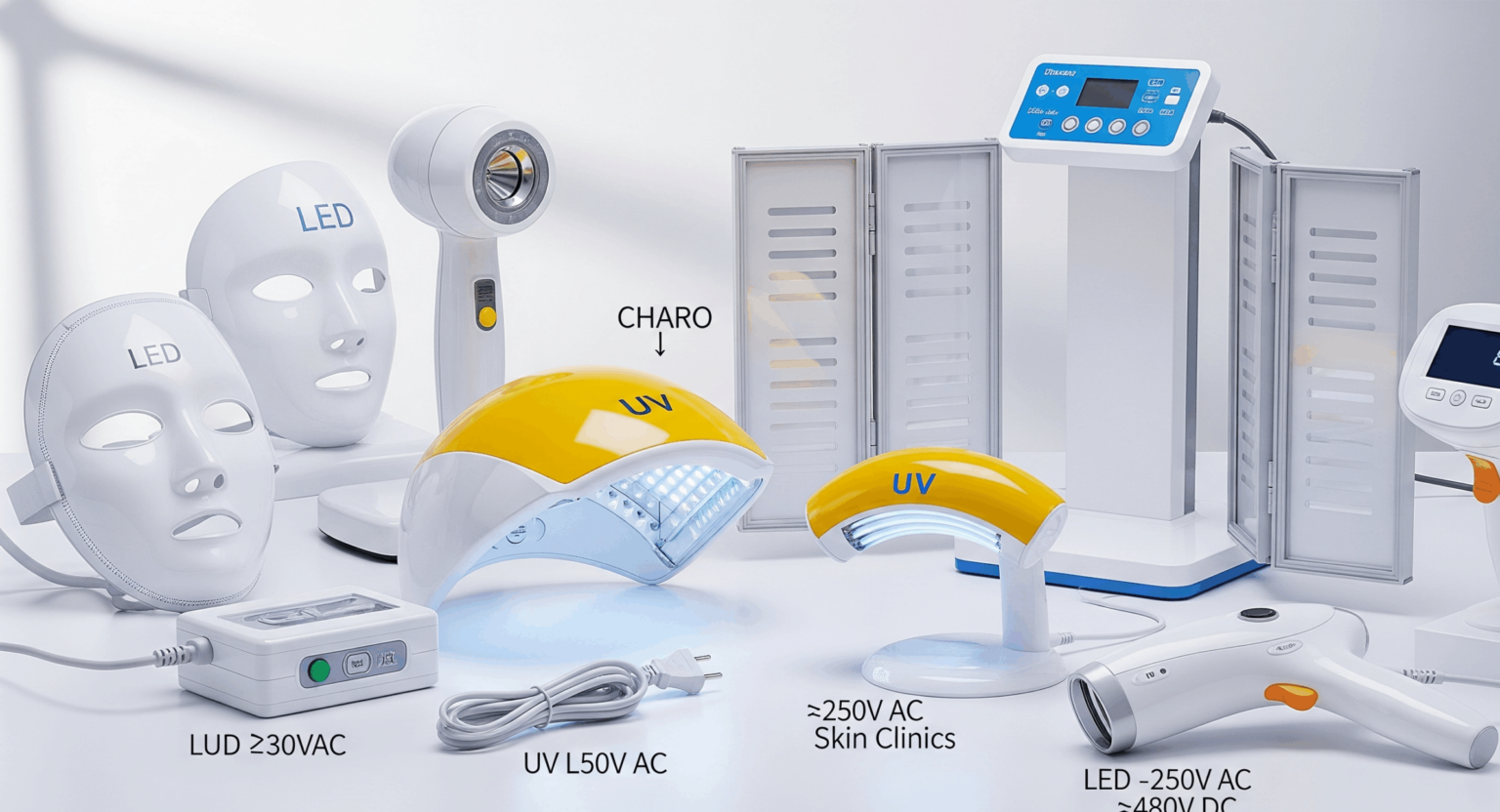
| Products Covered | Appliances designed for skin exposure to optical radiation, including beauty care devices, dermatological light-based equipment, UV exposure devices, and similar appliances falling within the scope of IS 302 (Part 1): 2024. |
| Exemptions | Products manufactured exclusively for export; up to 200 units per year imported for research and development (not for commercial sale); declared pre-implementation stock may be sold up to six months, subject to prescribed declaration; products already covered under any other QCO or mandatory BIS certification are excluded |
| Special Coverage | Includes appliances operating on single-phase up to 250V and other appliances up to 480V, including DC-supplied and battery-operated devices; specifically covers radiation-emitting appliances used for skin treatment or exposure. |
| Industries Impacted | Electrical appliance manufacturers, beauty and personal care device manufacturers, dermatology equipment suppliers, importers, distributors, salons, and wellness equipment providers, e-commerce platforms. |
| Mandatory Compliance | Products must conform to IS 302 (Part 1): 2024 and bear the ISI Mark under a valid BIS licence (Scheme-I) prior to manufacture, import, or sale in India. |
| Next Steps for Stakeholders | Identify applicable product categories; evaluate compliance with safety and radiation requirements; conduct testing through BIS-recognised laboratories; apply for BIS certification; complete factory inspection; obtain a licence; ensure ISI marking before enforcement dates. |
| Certification, Enforcement & Legal Framework | Certification and enforcement by the Bureau of Indian Standards (BIS) under Sections 16, 17, and 25(3) of the BIS Act, 2016, along with the BIS Conformity Assessment Regulations, 2018 (Scheme-I). |
| Penalty for Non-Compliance | Non-compliance attracts penalties under the BIS Act, 2016: (i) imprisonment up to 2 years; (ii) monetary fine not less than ₹2 lakh and up to ten times the value of goods; (iii) additional penalties for continued violations and seizure of non-compliant goods. |
| Amendment Clause | The latest version of IS 302 (Part 1), including all amendments notified by BIS from time to time, becomes applicable from the date of such notification. |
| Conclusion | BIS certification is mandatory for appliances for skin exposure to optical radiation from the notified dates. Early compliance ensures safety assurance, regulatory approval, and uninterrupted market access. |
| References/Annexures | BIS Act, 2016; BIS (Conformity Assessment) Regulations, 2018; S.O. 1739(E) dated 6 April 2026; IS 302 (Part 1): 2024; IEC 60335-1: 2020. |
Notification
Appliances for Skin Exposure to Optical Radiation have been brought under mandatory quality control through the Safety of Household, Commercial and Similar Electrical Appliances (Quality Control) Order, 2026, notified vide S.O. 1739(E) dated 6 April 2026 by the Department for Promotion of Industry and Internal Trade (DPIIT), Ministry of Commerce and Industry. This Order supersedes the earlier Safety of Household, Commercial and Similar Electrical Appliances (Quality Control) Order, 2025, except for actions taken prior to such supersession. The regulation mandates compliance with IS 302 (Part 1): 2024, aligned with IEC 60335-1: 2020 safety requirements.
Overview
The regulatory framework focuses on ensuring the safety of appliances that expose human skin to optical radiation, including ultraviolet (UV), infrared, and other light-based technologies used in beauty, wellness, and dermatological applications. Given the inherent risks associated with radiation exposure—such as burns, skin damage, and long-term health effects—the standard establishes strict requirements related to electrical safety, insulation, temperature limits, radiation control, and operational safeguards.
Objective & Scope
The primary objective is to protect users from electrical and radiation-related hazards by enforcing uniform safety standards. The scope covers appliances used in household, commercial, and similar environments operating within prescribed voltage limits, including both AC and DC-powered devices. It ensures that such appliances are designed, manufactured, and tested to minimize risks associated with improper radiation exposure and electrical faults.
Products Covered
The regulation covers a broad range of appliances designed for direct skin exposure to optical radiation, including beauty care devices, cosmetic treatment equipment, dermatological appliances, and similar products. These products must meet the general safety requirements specified in IS 302 (Part 1): 2024 to ensure safe operation under normal and abnormal conditions.
Exemptions Provided
Limited exemptions are provided for products manufactured exclusively for export, R&D imports up to 200 units annually (non-commercial use), and declared pre-implementation stock subject to specified conditions. Additionally, products already regulated under other applicable Quality Control Orders or BIS mandatory certification frameworks are excluded to avoid regulatory overlap.
Industries Impacted
The Order impacts a wide range of stakeholders, including manufacturers of beauty and personal care devices, dermatological equipment suppliers, importers, distributors, salons, wellness centers, and e-commerce platforms. Businesses involved in the production, import, or sale of such appliances must align their operations with the new compliance requirements.
Mandatory Compliance Requirements
Manufacturers and importers are required to obtain BIS certification under Scheme-I, ensure product testing through BIS-recognised laboratories, implement robust quality control systems, and affix the ISI Mark on compliant products. Compliance must be ensured before the applicable enforcement dates to avoid regulatory disruptions.
Enforcement Timeline
As per the notified implementation schedule, mandatory compliance applies from 1 October 2026 for general enterprises, 1 January 2027 for small enterprises, and 1 April 2027 for micro enterprises. These phased timelines provide staggered compliance windows to support MSMEs while ensuring a complete transition to regulated and safe electrical appliances across the market.
Next Steps for Stakeholders
Stakeholders should identify applicable product lines, initiate BIS certification processes, align product design with safety requirements, and plan certification timelines proactively. Early preparation is essential to ensure uninterrupted market access and avoid last-minute compliance risks.
Legal Provisions & Penalties
Certification and enforcement are administered by BIS under the BIS Act, 2016. Non-compliance attracts strict penalties, including imprisonment up to two years, fines starting from ₹2 lakh and extending up to ten times the value of goods, and additional penalties for continued violations. Regulatory authorities may also take action, such as seizure of non-compliant products.
Conclusion
Compliance with IS 302 (Part 1): 2024 is mandatory for appliances for skin exposure to optical radiation from the notified dates. Timely certification ensures product safety, regulatory compliance, and sustained market presence in India.
Ready to start your certification journey?
Let us help you navigate regulatory challenges and achieve certification with ease. Leave us your details, and we’ll get back to you—or request a free consultation today.