
Philippines Proposes New PNS 49:2026 Requirements for Deformed Steel Bars
The strength of a building during an earthquake is a function of the quality of the steel reinforcing it, as well as the design. In a country like the Philippines where earthquakes are common occurrences, updating the standards of construction materials has become an integral part of increasing structural resilience.
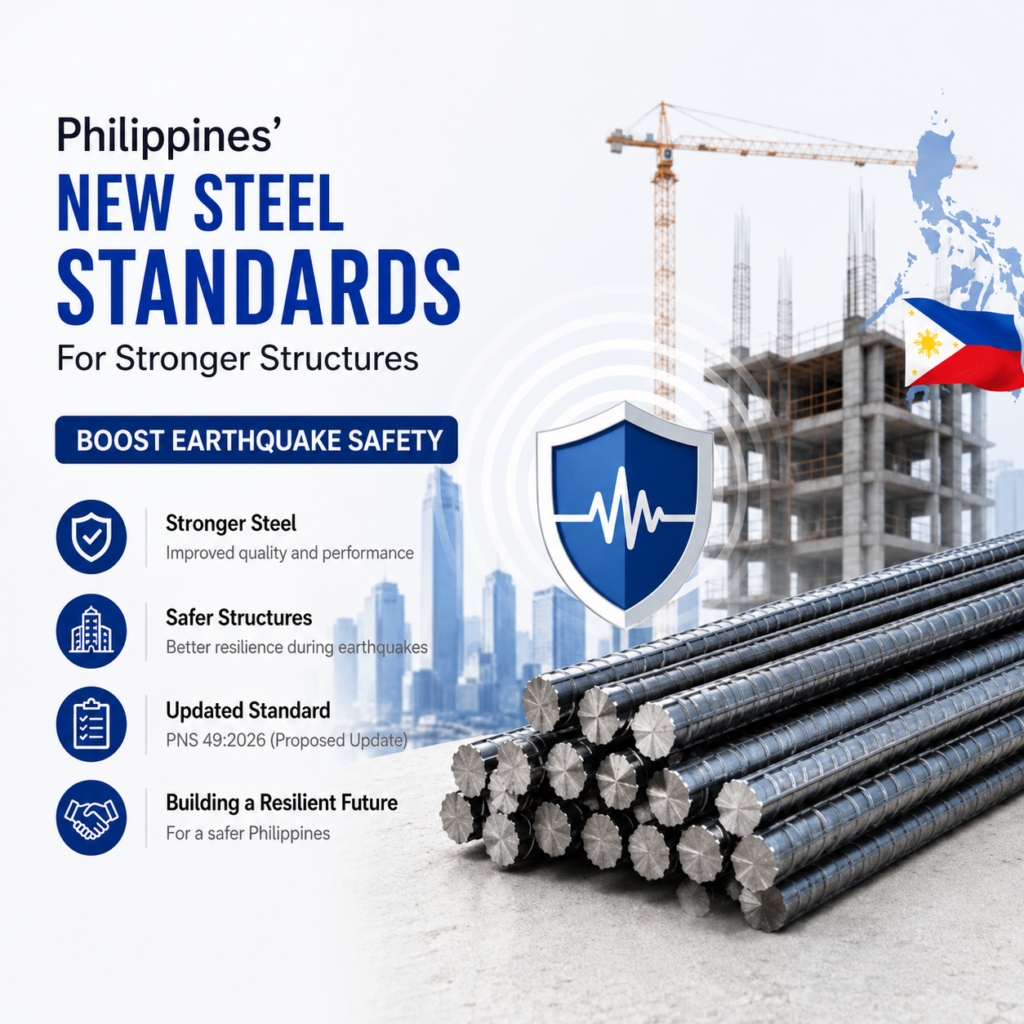
In response to this need, the Department of Trade and Industry (DTI), through the Bureau of Philippine Standards (BPS), has issued a draft Memorandum Circular providing additional guidelines for the implementation of DAO 18-08, Series of 2018. It also cited the new standard PNS 49:2026 as the replacement of the old one. This is a proposed implementation guideline, not a final requirement.
Manufacturers, importers, exporters and companies tracking the Philippines New Steel Standards need to be aware of these proposed changes today so that they can better prepare for future regulatory expectations. Similarly, companies involved in PNS Certification in India or companies seeking PNS Certificate Registration in India are also keenly observing these developments, as they can impact the future market access requirements for steel products entering the Philippine market.
Why the Philippines is Revisiting Steel Performance Standards
The proposed Memorandum Circular is issued to provide additional guidelines for the implementation of DAO 18-08, Series of 2018, which is the governing rule on the mandatory certification of deformed steel bars, rerolled steel bars and equal leg angle steel bars.
The draft proposes to revise the reference standard on deformed steel bars from PNS 49:2020 to the revised PNS 49:2026. The revised standard was published on 30 April 2026 and contains a number of important technical revisions.
The draft says the revised standard includes:
- Scope revised to cover steel bars for use in concrete structure reinforcement.
- Regular steel bar grades removed.
- Introduction of weldable steel grade 690W.
- Additional requirements on materials and manufacture.
- Changes to mechanical, chemical, physical and marking requirements.
These proposed changes reflect a trend towards increasing the technical requirements for reinforcing steel used in structural applications.
Why the industry should care about the proposed changes
The proposal comes at a time of increasing global focus on the quality of infrastructure and its structural resilience.
Steel reinforcement is the backbone of buildings, bridges, transport infrastructure and industrial facilities. Even small improvements in the technical requirements can have an impact on long-term structural performance.
Instead of establishing a new certification system, the draft proposes to amend the existing technical standard under the mandatory certification system under DAO 18-08, Series of 2018.
This means that before they become legally binding, manufacturers and exporters should keep an eye on regulatory developments.
Proposed PNS 49:2026 Update Implications
Major changes in draft standard
This is not a normal revision but a proposed move to PNS 49:2026.
The updated standard, as per the draft Memorandum Circular, proposes changes affecting several technical aspects of deformed steel bars, such as:
- Scope of product
- Material specification
- Production requirements
- Mechanical properties
- Chemical composition
- Physical traits
- Marking requirements of products.
Taken together, these revisions suggest a move toward updating the technical requirements for reinforcing steel products used in construction.
How the Proposal Relates to Existing Steel Regulations
This draft is not a replacement for the existing mandatory certification framework, which is prescribed under DAO 18-08:2018.
Instead, it suggests changing the reference standard that is used in this framework.
The draft also provides that:
The implementation of the Memorandum Circular shall take effect on the date of its issuance. Manufacturers may voluntarily adopt PNS 49:2026.
Mandatory implementation will be effective 12 months after publication of PNS 49:2026 or 30 April 2027, if the proposed Circular is approved.
The transition period is intended to give manufacturers time to adapt to the revised technical requirements.
Building Better Buildings With Safer Steel Standards
Why Is Seismic Grade Steel in the Philippines Increasing Attention
The Philippines is in one of the most earthquake-prone areas in the world.
Earthquakes cannot be prevented and are unpredictable, but one practical way to improve structural resilience is to improve the construction materials.
The proposed revisions to PNS 49:2026 reflect an increasing emphasis on the use of steel for reinforcement for structural purposes.
While the draft does not explicitly include the phrase Seismic Grade Steel Philippines, the revisions, especially the addition of the weldable grade 690W and the updated material requirements, point to an increased focus on steel for structural performance.
It’s part of a broader push to develop building materials that can help create safer and more resilient infrastructure.
The Growing Significance of Earthquake-Resistant Steel
In many earthquake-prone countries, the role of reinforcing steel is very important in the safety of structures.
Today’s construction is in need of materials that can hold their strength, flexibility and durability in demanding conditions.
The proposed amendments to PNS 49:2026 are in line with this wider objective by updating technical requirements governing reinforcing steel bars used in structural concrete applications.
The draft emphasises technical standards, not building practices, but underscores the continuing need for quality materials to underpin safer buildings and infrastructure.
Impacts of the Proposal on Steel Manufacturing
Greater focus on material performance
If the proposed Memorandum Circular is adopted, the deformed steel bar manufacturers for the Philippine market will transition to the new reference standard.
The draft indicates that future certification would be based on PNS 49:2026 that incorporates revised expectations on material properties, manufacturing and product conformity.
This continues the focus on uniform manufacturing methods in the steel industry.
Changing Expectations of Product Quality
Manufacturing standards are changing with the changing technical requirements.
Proposed revisions, such as those in PNS 49:2026, are increasingly important for steel manufacturers: Reliable product quality, Technical correctness, Material performance.
Standardised production procedures, Knowledge of rules.
Many exporters to international markets also monitor developments in related certification systems and technical standards via industry resources such as ERA Global Standards Certification to stay up to date on changing compliance expectations.
What importers and exporters need to watch
Reading the Future in Market Expectations
The proposed Memorandum Circular is not yet final but provides a clear indication to manufacturers, importers and exporters of the direction the Philippine steel regulatory framework is heading towards.
The draft recommends PNS 49:2026 as the reference standard for deformed steel bars under DAO 18-08:2018. If the proposal is adopted, it also proposes a transition period to allow voluntary adoption after the Circular comes into effect and mandatory implementation from 30 April 2027.
Those companies that provide steel products to the Philippines can take advantage of this knowledge of the proposed changes to assist with long-term planning and to monitor future regulatory developments.
Preparing for Changing Product Specs.
Steel manufacturers and exporters often sell products to more than one international market, with different technical requirements.
As proposed standards evolve, businesses tend to focus more on: Product specifications, Grades of Material, Consistent manufacturing, Technical documentation, and marking requirements of the product. The proposed revision to DTI Steel Standards Philippines is an indication of the continued effort to improve product quality through revised technical standards and not a new certification system.
Why Early Awareness Is Important
Developments Under DTI Steel Standards Philippines
Draft regulations are an important part of the regulatory process, giving the industry an opportunity to understand proposed changes before they are implemented.
The draft Memorandum Circular provides for several transition measures, including:
Voluntary use of PNS 49:2026 after the Circular comes into effect.
Mandatory application proposed from 30 April 2027.
Proposed transition period followed by cancellation of existing PS licences for regular steel grades.
Market monitoring according to PNS 49:2026 after the proposed date of implementation.
Since these measures are part of a draft proposal, businesses are advised to continue monitoring official announcements from the Department of Trade and Industry (DTI) and the Bureau of Philippine Standards (BPS).
Staying Informed Before the Proposal Is Effective
Regulatory change is seldom a sudden event.
Draft standards also provide manufacturers, importers, testing laboratories, certification bodies and industry associations with an opportunity to review proposed technical changes before implementation.
For businesses that operate internationally, advance knowledge can often support: Improved business planning, Better product development, Manufacturing strategies in the long term, Better understanding of future market expectations.
What the Draft Could Mean for the Construction Industry
Supporting long-term infrastructure resilience
Countries are increasing building safety requirements, so building standards are evolving.
The proposed amendments to PNS 49:2026 are specifically on reinforcing steel for structural applications and cover revised requirements on manufacturing, materials, mechanical properties, chemical composition, physical characteristics and product marking.
The suggested changes reflect an increasing emphasis on improving the technical properties of reinforcing steel for use in construction.
Increasing Confidence in Structural Materials
Quality of steel is very important for modern infrastructure.
The changing technical standards also help to create more consistent expectations across the construction supply chain.
The revised standards provide manufacturers, contractors, project developers and infrastructure stakeholders with greater confidence in the quality of materials and consistency of products.
While the draft is specifically concerned with the technical requirements for reinforcing steel bars, its wider aim is to bolster structural reliability.
PNS Certification in India: Understanding in a Changing Regulatory Environment
How PNS Certificate Registration India is Increasingly Relevant
With international regulatory requirements constantly changing, exporters are paying more attention to what’s going on outside their home markets.
For companies that want to know about PNS Certificate Registration India or are considering PNS Certification in India, the proposed Philippine steel standard emphasises the necessity of keeping track of regulatory developments before they become mandatory.
Increasingly, compliance with destination country standards matters for international trade.
Many companies selling in multiple markets track technical changes in certification systems to get a better understanding of what future market expectations and regulatory landscapes might look like.
In this broader regulatory context, organisations like ERA Global Standards Certification are commonly referenced as sources of information on international certification requirements and regulatory developments.
Looking past the draft proposal
The proposed Memorandum Circular is a significant step in the Philippines’ continuing efforts to modernise the technical standards for reinforcing steel.
While the proposal is not a final regulatory requirement, it offers valuable insight into the future direction of the Philippines New Steel Standards.
The proposed changes, if adopted, would amend the reference standard for deformed steel bars under DAO 18-08:2018, introduce updated technical requirements through PNS 49:2026, and establish proposed transition timelines for manufacturers and importers.
Businesses in the steel manufacturing, exporting, importing, and certification arena should watch for future announcements as the regulatory process progresses.
Final thoughts
The draft amendments of PNS 49:2026 show the Philippines’ ongoing commitment to enhance the technical standards of reinforcing steel for structural applications.
While the Memorandum Circular is still a draft proposal, it does contain major changes such as new material requirements, updated mechanical and chemical requirements, the addition of the 690W grade and a proposed migration to the revised reference standard under DAO 18-08:2018.
The proposal highlights the need for manufacturers, importers, exporters and businesses complying with the Philippines New Steel Standards, Seismic Grade Steel Philippines and Earthquake Resistant Steel to keep themselves up to date with the technical requirements as they are being formulated, before they become mandatory.
As earthquake-prone regions update their infrastructure standards, awareness of regulations is an important element of long-term business planning and readiness for international markets.
About the Author
ERA Global Standards Certification helps you understand product regulations worldwide, certification requirements and developments in global market access. If you want to know more about certification updates and compliance requirements, check out www.eraglobal.co.in/contact.