
Portable Sealed Secondary Cells & Batteries containing Alkaline or other non-acid Electrolytes – Safety Standard
Sealed Secondary Cells / Batteries containing Alkaline or other Non-Acid Electrolytes for Portable Applications.
Strategic Recommendations for Sealed Secondary Cells/Batteries (Nickel Systems) – IS 16046 (Part 1):2018
- Apply for BIS CRS Registration
All nickel-based sealed secondary cells and portable battery packs must conform to IS 16046 (Part 1):2018 and obtain BIS CRS certification before manufacture, import, or sale. - Engage Compliance Experts
Collaborate with ERA Compliance Team for BIS filing, exemption clarifications (export/R&D/HSE), and testing coordination with BIS-recognized labs. - Contact ERA Support Team
📧 cs@eraglobal.co.in | 📞 +91 9599296331 | 💬 WhatsApp – For CRS application, documentation, and regulatory clarifications. - Track Notifications & Amendments
Subscribe to ERA Newsletter for updates on CRS/QCO changes, port labeling norms, enforcement extensions, and BIS amendments. - Conduct Gap Assessment
Review product compliance with IS 16046 (Part 1):2018 covering electrical safety, thermal safety, leakage/venting, mechanical strength, and BIS marking obligations.
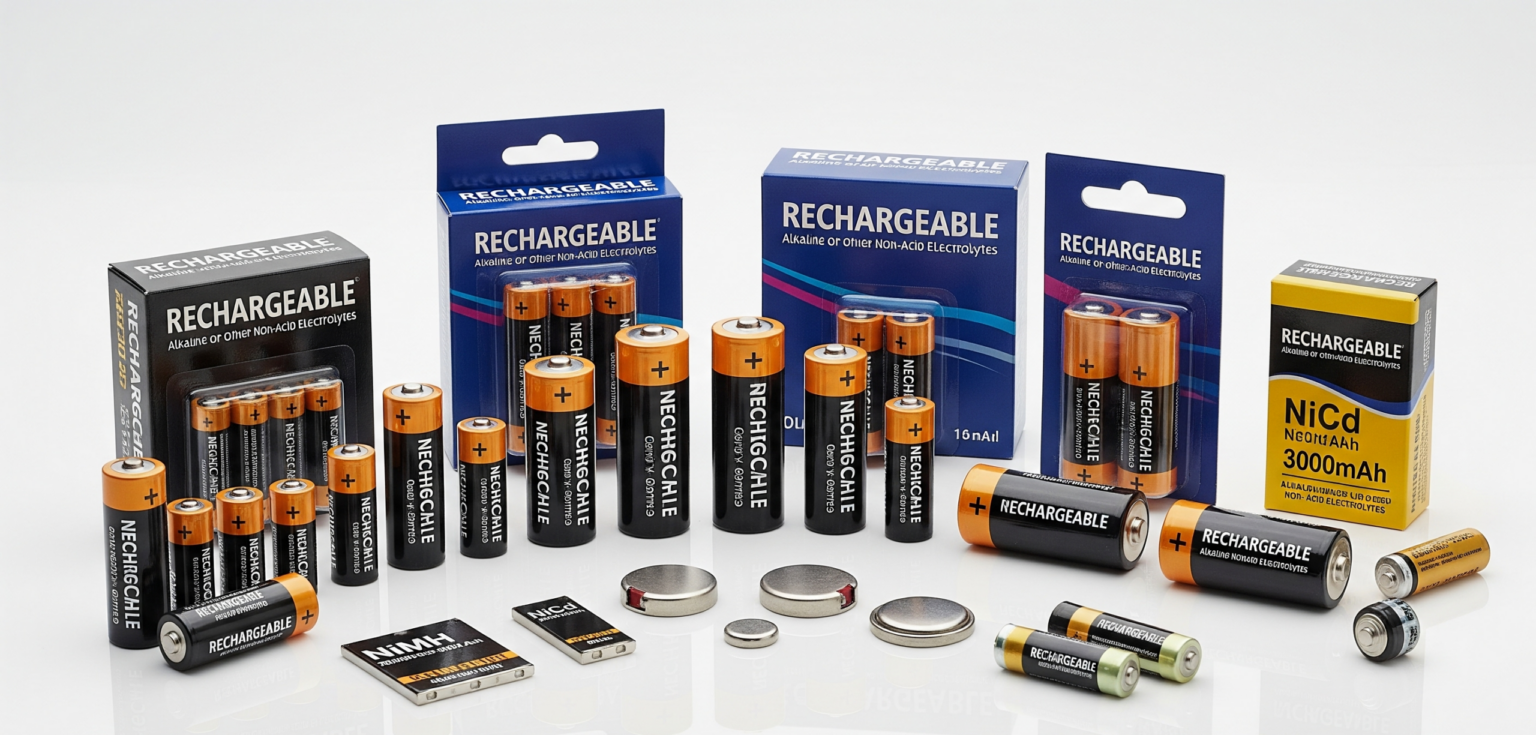
| Section | Details |
|---|---|
| Product Name | Sealed Secondary Cells / Batteries containing Alkaline or other Non-Acid Electrolytes for Portable Applications. |
| Applicable Indian Standard (IS) No. | IS 16046 (Part 1): 2018. |
| Title of Indian Standard | Secondary Cells and Batteries Containing Alkaline or Other Non-Acid Electrolytes – Safety Requirements for Portable Sealed Secondary Cells and for Batteries Made from Them for Use in Portable Applications – Part 1: Nickel Systems. |
| Quality Control Order | Electronics and IT Goods (Requirements for Compulsory Registration) Order, 2012 (as amended) & Electronics and IT Goods (Requirements for Compulsory Registration) Order, 2021. |
| Notification & Amendments |
- S.O. 2357(E), dated 3rd October 2012 (principal CRS Order) - S.O. 2905(E), dated 13th November 2014 (inclusion of batteries under CRS) - S.O. 2579(E), dated 21st September 2015 (extension of implementation) - S.O. 344(E), dated 3rd February 2016 (final enforcement date – 1st June 2016 for batteries) - S.O. 345(E), dated 17th December 2015 (deferred application for new manufacturing locations) - S.O. 1248(E), dated 18th March 2021 (CRS 2021 Order under BIS Act, 2016) - S.O. 1353(E), dated 25th March 2021 (corrigendum) - S.O. 2844(E), dated 1st July 2021 (further amendments – deferred application, port labeling, HSE exemption) |
| Final Enforcement Date |
- CRS 2012 → 1st June 2016 (enforcement for batteries) - CRS 2021 → 18th September 2021 (six months from notification date). |
| Objective & Scope | To ensure safety, reliability, and performance of portable sealed secondary cells and batteries containing alkaline or other non-acid electrolytes (Nickel Systems), protecting users from risks of leakage, explosion, overheating, or fire. |
| Products Covered | - Nickel-based sealed secondary cells (e.g., Ni-Cd, Ni-MH), - Portable battery packs made from these cells, - Intended for portable applications (IT devices, tools, consumer electronics). |
| Exemptions | - Goods manufactured exclusively for export, - Products imported solely for R&D, testing, or demo (later scrapped/exported), - Highly Specialized Equipment (HSE) exempted under CRS 2021 (criteria: 3-phase supply, >16A, >80kg, >1.5m × 0.8m). |
| Industries Impacted | - Battery manufacturers & assemblers, - Consumer electronics OEMs, - Portable device manufacturers (IT, telecom, healthcare), - Importers & distributors of rechargeable batteries. |
| Mandatory Compliance |
- Must conform to IS 16046 (Part 1):2018, - BIS CRS Registration mandatory, - Products must bear marking: “Self declaration – Conforming to IS 16046 (Part 1):2018 – (Unique Registration No.)”. |
| Testing Parameters |
- Electrical safety (short-circuit, overcharge, forced discharge), - Thermal safety (temperature cycling, overheating), - Mechanical tests (vibration, impact, shock), - Leakage and venting, - Endurance & performance testing. |
| Certification & Enforcement Authority | Bureau of Indian Standards (BIS). Enforcement also supported by MeitY and local authorities (e.g., District Industries Centres). |
| Penalties for Non-Compliance | Suspension or cancellation of registration, seizure of stock, fines, and imprisonment up to 2 years or both, under the BIS Act, 2016. |
| Conclusion | All portable sealed secondary cells/batteries (Nickel Systems) must be BIS-certified under IS 16046 (Part 1):2018 before being manufactured, imported, or sold in India. This ensures safe, reliable, and high-performance portable power solutions, reducing risks to consumers and supporting sustainable use of rechargeable batteries. |
Notification
Sealed Secondary Cells and Batteries containing Alkaline or other Non-Acid Electrolytes for Portable Applications were brought under regulation through the Electronics and IT Goods (Requirements for Compulsory Registration) Order, 2012, via S.O. 2905(E), dated 13th November 2014. Implementation was extended through S.O. 2579(E), dated 21st September 2015, with final enforcement fixed on 1st June 2016 by S.O. 344(E), dated 3rd February 2016. Subsequently, these products were covered under the Electronics and IT Goods (Requirements for Compulsory Registration) Order, 2021 (S.O. 1248(E), dated 18th March 2021), effective 18th September 2021, with corrigendum and amendments issued in March and July 2021.
Overview
Nickel-based sealed secondary cells and portable battery packs are widely used in IT devices, consumer electronics, telecom equipment, medical devices, and portable tools. IS 16046 (Part 1):2018 sets out the safety requirements to prevent hazards such as leakage, venting, fire, and explosion, ensuring safe use in portable applications.
Objective & Scope
The regulation aims to eliminate substandard and unsafe battery products from the Indian market, ensuring consumer safety, reliability, and compliance with international safety standards.
Products Covered
This standard applies to:
- Nickel-based sealed secondary cells (Ni-Cd, Ni-MH),
- Portable rechargeable battery packs built from such cells,
- Intended exclusively for portable applications.
Exemptions Provided
- Products manufactured solely for export,
- Goods imported for testing/demo/R&D,
- Highly Specialized Equipment (HSE) exempted under CRS 2021 if meeting power/size/weight criteria.
Industries Impacted
Battery manufacturers, OEMs of portable electronic devices, medical equipment makers, importers, distributors, and the consumer electronics supply chain.
Mandatory Compliance Requirements
All such batteries must:
- Conform to IS 16046 (Part 1):2018,
- Obtain BIS CRS Registration,
- Carry mandatory BIS compliance marking before being marketed.
Enforcement Timeline
- CRS 2012 → enforced from 1st June 2016,
- CRS 2021 → applicable from 18th September 2021.
Legal Provisions, Enforcement & Penalties
Non-compliance attracts strict penalties under the BIS Act, 2016, including seizure of stock, cancellation of license, fines, and imprisonment up to 2 years.
Conclusion
Effective from June 2016 under CRS 2012 and reinforced under CRS 2021, BIS certification is mandatory for all sealed secondary cells and batteries containing alkaline or other non-acid electrolytes for portable applications (Nickel Systems). This ensures product safety, consumer protection, and alignment with global best practices in rechargeable battery standards.
Ready to start your certification journey?
Let us help you navigate regulatory challenges and achieve certification with ease. Leave us your details, and we’ll get back to you—or request a free consultation today.