
Cylinder, Valves and Regulator
Welded and seamless steel dissolved acetylene gas cylinders
Strategic Recommendations for Welded and seamless steel dissolved acetylene gas cylinders IS 7312
- Begin BIS Certification Immediately
(Heading retained for consistency) Even though acetylene is PESO/GCR-regulated (not a BIS QCO), start immediate internal certification: align IS 7312 technical specs, IS:8433 inspection steps, and GCR 2016 Chapter V procedures to company QA processes. - Consult Compliance Professionals (ERA)
Engage ERA for PESO licence/compliance support, HAZOP/disaster plan drafting, and to validate porous/solvent control, inspection regimes and plant layout against GCR 2016. - Reach Out for Support
📧 cs@eraglobal.co.in | 📞 +91 95992 96331 | 💬 WhatsApp
For help with PESO dossier preparation (Forms B/C/D/E/F), HAZOP study, testing station tie-ups and training programs. - Track QCO Amendments & Exemptions
Subscribe to ERA Newsletter for Monitor PESO circulars and any future amendments impacting dissolved-acetylene rules (safety equipment, testing periodicity, possession thresholds). - Ensure Marking & Documentation
Implement strict record cards for each acetylene cylinder (tare weight, solvent weight, full weight, dates of charging & solvent addition, inspection dates), attach warning labels with last fill/date/weight and retain history sheets per Rules 41–42 for PESO inspection.
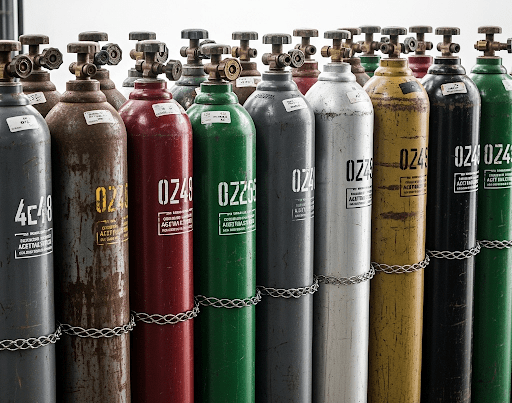
| Section | Details |
|---|---|
| Product Name | Welded and seamless steel dissolved acetylene gas cylinders |
| Applicable Indian Standard (IS) No. | IS 7312 |
| Title of Indian Standard | Welded and Seamless Steel Dissolved Acetylene Gas Cylinders — Specification (IS 7312) |
| Quality Control Order | Not a BIS QCO. Regulated under Gas Cylinders Rules, 2016 (GSR 1081(E)) issued under the Explosives Act, 1884 (PESO framework). |
| Notification & Amendments | GCR 2016 notified via GSR 1081(E), 22 Nov 2016 (superseding Gas Cylinders Rules, 2004); draft published as GSR 779(E), 13 Oct 2015; later amended by the Gas Cylinders (Amendment) Rules, 2022. Chapter V of GCR 2016 contains specific dissolved-acetylene provisions. |
| Final Enforcement Date | 22 November 2016 (date of Gazette notification; rules effective on publication). |
| Objective & Scope | To set safety, design, filling, testing, labelling and record-keeping obligations specific to dissolved-acetylene cylinders (porous mass, solvent charge, filling checks, plant safety and emergency procedures). |
| Products Covered | Dissolved-acetylene cylinders (welded and seamless steel types) charged with acetylene in a solvent/porous mass as per IS 7312 and subject to additional GCR 2016 requirements. |
| Exemptions | No product-specific exemption. General limited-possession exemptions (e.g., possession up to 25 dissolved-acetylene cylinders for own use) under Rule 44 apply. |
| Industries Impacted | Acetylene cylinder manufacturers/repairers, acetylene generation/compression plants, welding gas suppliers, industrial gas distributors, cylinder testing & hot-repair stations, PESO licensing authorities. |
| Mandatory Compliance | Pre-filling examination (visual & porous mass checks per Rule 39 / IS:8433), possession of cylinder history before charging (Rule 38–41), mandatory record-keeping of solvent & charge details, labelling requirements (Rule 42), licenced premises for compression (Rule 40), plant safety systems (flame arrestors, deluge, no CO₂ extinguishers for acetylene), and periodic testing/condemnation rules (Rules 35–36). |
| Next Steps for Stakeholders | Ensure plant & procedures meet GCR 2016 acetylene provisions (porous fill, solvent control, emergency procedures), obtain/renew PESO licences for compression & storage, implement records & labelling per Rule 41–42, train staff on acetylene-specific hazards, and set up approved testing/neutralisation facilities. |
| Legal Framework Provision & Enforcement | Enforced under the Explosives Act, 1884 via Gas Cylinders Rules, 2016; PESO (Chief Controller/Controllers) carries out approvals, inspections, test-station recognition and enforcement actions. |
| Penalties for Non-Compliance | Seizure of non-compliant cylinders, revocation/suspension of licences/approvals, monetary fines and prosecution under the Explosives Act; condemned acetylene cylinders must be destroyed under controlled procedures. |
| Conclusion | IS 7312 dissolved-acetylene cylinders are tightly regulated under GCR 2016. Compliance requires strict porous/solvent control, detailed records, plant licensing, acetylene-specific safety systems, testing, labelling and PESO approvals for lawful filling, storage and distribution. |
| References / Annexures | GSR 1081(E) — Gas Cylinders Rules, 2016 (Chapters IV–VI, esp. Chapter V on dissolved acetylene); Draft GSR 779(E) (2015); IS:8433 (visual exam); Rule references: 35–42; Schedule IV (testing), Forms (D/E/F), and PESO guidance. |
Ready to start your certification journey?
Let us help you navigate regulatory challenges and achieve certification with ease. Leave us your details, and we’ll get back to you—or request a free consultation today.
Get in touch with us today
Notification
Dissolved acetylene cylinders (IS 7312) are expressly subject to additional provisions in the Gas Cylinders Rules, 2016, notified by GSR 1081(E) dated 22 November 2016. The dissolved-acetylene provisions appear in Chapter V of the Rules; the rules were published from draft GSR 779(E) dated 13 October 2015 and later updated (e.g., Gas Cylinders (Amendment) Rules, 2022).
Enforcement Timeline
GCR 2016 became effective on 22 November 2016; the dissolved-acetylene-specific obligations (examination, labelling, licensed compression, records, plant safety) have been enforceable since that date.
Overview
Chapter V of GCR 2016 sets additional, acetylene-specific requirements beyond the general cylinder rules: complete filling of porous mass, solvent quantity control, strict filling/inspection histories, more frequent examinations for loose porous fills, dedicated licensing for compression plants, special plant safety features (flame arrestors, deluge, hose/burst-pressure specs), and precise labelling/recording for each charge.
Objective & Scope
To eliminate decomposition/detonation risks unique to acetylene by specifying porous fill and solvent practices, inspection intervals, safe plant design (to resist acetylene decomposition), emergency procedures, and rigorous documentation so cylinders remain safe in service.
Products Covered
Welded and seamless steel dissolved acetylene cylinders (charged with acetylene into solvent-filled/porous-mass cylinders) manufactured, filled, tested, stored or supplied in India, as per IS 7312 and GCR 2016 provisions.
Exemptions Provided
No product-specific exemptions. However Rule 44 provides limited possession exceptions — e.g., possession of up to 25 dissolved-acetylene cylinders for own use is exempt from licensing (subject to the Rule’s conditions).
Industries Impacted
Acetylene generation and compression plants, welding gas suppliers, cylinder manufacturers/repairers, testing & hot-repair stations, industrial gas distributors and PESO approval/licensing bodies. Also impacts safety & emergency-response planning teams at sites handling acetylene.
Mandatory Compliance Requirements
Key mandatory items under GCR 2016 (Chapter V & related rules):
• Porous substance must fill cylinder as completely as possible; solvent charge must be controlled (composition and quantity).
• No charging unless full cylinder history & particulars are available (Rule 38).
• Visual inspection per IS:8433 (Scheme-I ) at each charge; if no exam in previous 2 years, remove valve and inspect porous mass; yearly exam where loose mass is used.
• Licensed premises only for compression of acetylene (Rule 40).
• Maintain detailed charge records (tare, solvent weight, full weight, dates of solvent addition, exam dates) — open to Chief Controller inspection (Rule 41).
• Warning label with last fill date, weight of gas filled, full cylinder weight, and name of last filler (Rule 42).
• Plant safety: flame arrestors, high-burst-pressure hoses (≥1000 bar for high-pressure acetylene hoses quoted), deluge and emergency systems; no CO₂ extinguishers on flammable-gas fires (use DCP). Designers must account for decomposition/detonation resistance in manifolds.
• Periodic testing, condemnation and record-keeping per Rules 35–36 and Schedule IV; condemned acetylene cylinders damaged by fire must be destroyed by competent personnel.
Next Steps for Stakeholders
- Review and update plant SOPs to ensure porous-mass filling, solvent-replenishment and charging records match Rule 37–42.
- Confirm PESO licences cover acetylene compression and storage (Form F / Forms as applicable), and submit required HAZOP / Disaster Management Plan for toxic/flammable duties.
- Ensure test-station/neutralisation facilities, degassing platform, and emergency systems meet Schedule IV & Chapter-requirements.
- Train personnel on acetylene hazards, solvent replenishment, visual inspection (IS:8433 Scheme-I ) and emergency flare/cooling procedures.
Legal Provisions, Enforcement & Penalties
Enforcement is via PESO under the Explosives Act, 1884 (GCR 2016). Inspectors may demand records, seize non-compliant cylinders, cancel licences and prosecute offenders. Cylinders condemned for safety reasons must be destroyed and markings defaced; history sheets of destroyed cylinders must be retained/closed as required.
Conclusion
IS 7312 dissolved-acetylene cylinders are subject to stringent, acetylene-specific controls in GCR 2016 (Ch. V). Operators must maintain solvent/porous mass regimes, rigorous inspection and record practices, PESO licences for compression/storage, acetylene-specific plant safety systems and approved testing/condemnation procedures to operate lawfully and safely.
References / Annexures
- GSR 1081(E) — Gas Cylinders Rules, 2016 (Chapters IV–VI; esp. Chapter V on dissolved acetylene).
- Draft GSR 779(E) (13 Oct 2015).
- IS:8433 (visual examination guidance referenced in Rule 39).
- Rule references: 35–42, Schedule IV (testing), Forms D/E/F, licensing & HAZOP requirements.
Ready to start your certification journey?
Let us help you navigate regulatory challenges and achieve certification with ease. Leave us your details, and we’ll get back to you—or request a free consultation today.