
Safety of Power Converters for Use in Photovoltaic Power Systems Part 2-Particular Requirements for Inverters
Power Converters for Use in Photovoltaic Power Systems (Inverters)
Strategic Recommendations for PV Inverters – IS 16221 (Part 2)
- Apply for BIS CRS Registration
All PV inverters must be BIS-certified under IS 16221 (Part 2) before import, manufacture, or sale in India. - Collaborate with Compliance Experts
Engage ERA Global experts for BIS application filing, electrical safety testing, performance verification, and documentation support for R&D or export exemptions. - Contact ERA Support Team
📧 cs@eraglobal.co.in | 📞 +91 9599296331 | 💬 WhatsApp – For CRS application, test lab coordination, and regulatory guidance. - Track Notifications & Amendments
Stay updated via ERA Regulatory Newsletter on CRS amendments, BIS standard revisions, and MNRE circulars affecting PV inverters. - Conduct Gap Assessment
Audit PV inverters for IS 16221 (Part 2) compliance—covering electrical safety, protection features, overload and short-circuit handling, and BIS marking readiness.
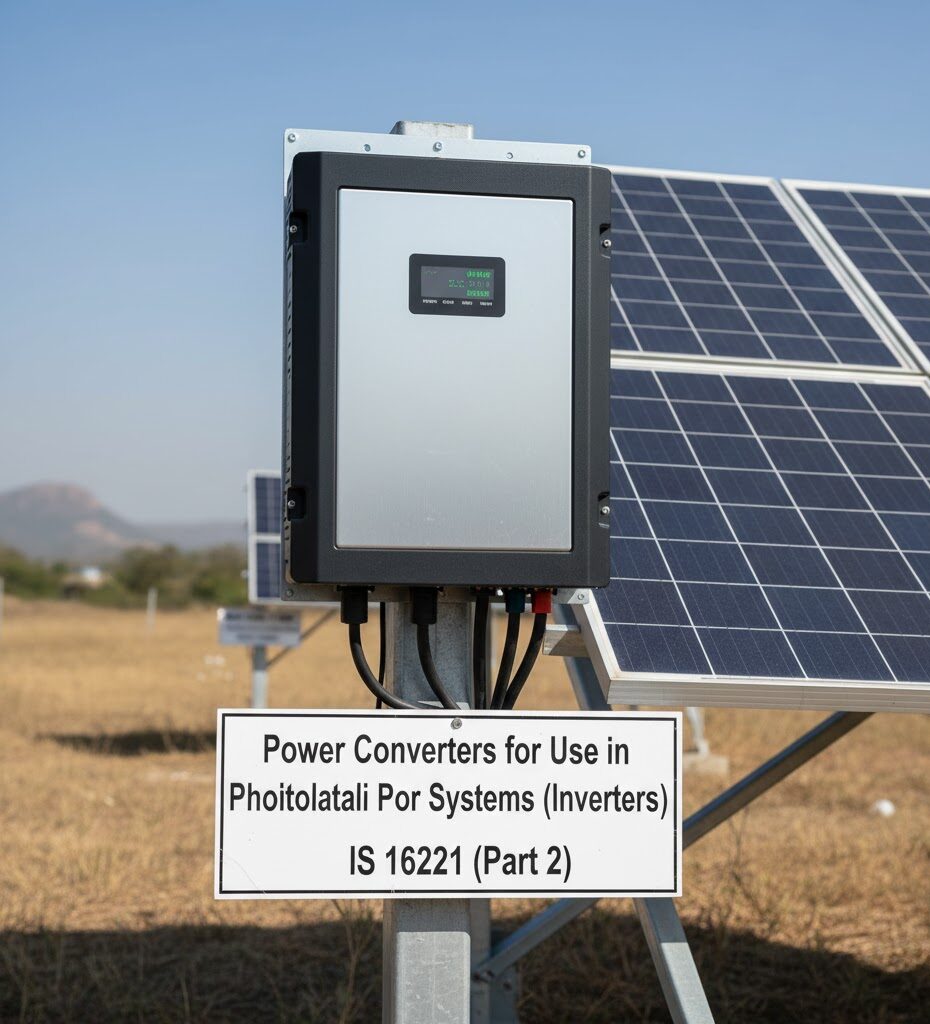
| Section | Details |
|---|---|
| Product Name | Power Converters for Use in Photovoltaic Power Systems (Inverters) |
| Applicable Indian Standard (IS) No. | IS 16221 (Part 2) |
| Title of Indian Standard | Safety of Power Converters for Use in Photovoltaic Power Systems – Part 2: Particular Requirements for Inverters |
| Quality Control Order | Solar Photovoltaics, Systems, Devices and Components Goods (Requirements for Compulsory Registration) Order, 2017 under the BIS Act, 1986 |
| Notification & Amendments | S.O. 2920(E), dated 5th September 2017 |
| Final Enforcement Date | CRS 2017 → 5th September 2018 (one year after notification) |
| Objective & Scope | To ensure the electrical and operational safety of inverters used in PV systems, including proper insulation, overload protection, and prevention of hazards in grid-connected or off-grid solar installations. |
| Products Covered | All power converters and inverters designed for photovoltaic systems, including single-phase and three-phase inverters for grid-connected and off-grid systems. |
| Exemptions |
- Products exclusively manufactured for export - Units imported for R&D, testing, or demonstration purposes (to be scrapped/exported later) |
| Industries Impacted |
- PV inverter manufacturers and importers - Solar EPC and project developers - Grid-connected/off-grid solar system integrators - Renewable energy distributors and retailers |
| Mandatory Compliance |
- Must conform to IS 16221 (Part 2) - BIS CRS registration mandatory prior to manufacture, sale, or import - Each inverter must bear BIS Standard Mark and registration number |
| Testing Parameters |
- Electrical safety (insulation, leakage currents) - Overload and short-circuit protection - Protection against electric shock and fire hazards - Performance under abnormal operating conditions |
| Certification & Enforcement Authority | Bureau of Indian Standards (BIS) – certification authority; enforcement assisted by MNRE and local authorities |
| Penalties for Non-Compliance | Non-compliance may result in registration cancellation, seizure of non-conforming inverters, monetary fines, and legal action under the BIS Act, 1986 |
| Conclusion | All inverters for PV systems sold, imported, or manufactured in India must comply with IS 16221 (Part 2) under BIS CRS, ensuring safe, reliable, and standard-compliant operation of photovoltaic power systems. |
Ready to start your certification journey?
Let us help you navigate regulatory challenges and achieve certification with ease. Leave us your details, and we’ll get back to you—or request a free consultation today.
Get in touch with us today
Notification
Power converters and inverters for photovoltaic power systems were included under the Solar Photovoltaics, Systems, Devices and Components Goods (Requirements for Compulsory Registration) Order, 2017 via S.O. 2920(E), dated 5th September 2017, with enforcement effective from 5th September 2018.
Overview
Inverters are a critical component of PV systems, converting DC power generated by solar modules into AC power for grid or off-grid use. IS 16221 (Part 2) ensures inverters meet strict electrical safety and operational requirements, including insulation, overload protection, and hazard prevention, protecting system integrators and end-users.
Objective & Scope
The BIS CRS framework ensures all PV inverters entering India are tested for electrical safety, performance reliability, and operational compliance, preventing unsafe or substandard inverters from being installed in solar projects, in alignment with MNRE’s quality assurance objectives.
Products Covered
- PV inverters of varying capacities and types (single-phase, three-phase)
- Grid-connected and off-grid system inverters
- Inverters for commercial, industrial, and residential solar installations
Exemptions Provided
- Inverters manufactured exclusively for export
- Units imported for demonstration, testing, or R&D (non-commercial use)
Industries Impacted
- PV inverter manufacturers and importers
- Solar EPC companies and project developers
- System integrators for grid-connected/off-grid installations
- Renewable energy distributors and retailers
Mandatory Compliance Requirements
All PV inverters marketed in India must:
- Comply with IS 16221 (Part 2)
- Be tested and certified under BIS CRS
- Carry the prescribed BIS Standard Mark and registration number
Enforcement Timeline
CRS 2017: Effective 5th September 2018
Legal Provisions, Enforcement & Penalties
Enforced under the BIS Act, 1986, with monitoring by BIS and MNRE. Violations attract penalties including registration cancellation, fines, seizure of non-conforming inverters, and legal action.
Conclusion
Since September 2018, all PV inverters manufactured, imported, or sold in India must comply with IS 16221 (Part 2) under BIS CRS, ensuring safe, reliable, and standard-compliant operation of photovoltaic power systems.
Ready to start your certification journey?
Let us help you navigate regulatory challenges and achieve certification with ease. Leave us your details, and we’ll get back to you—or request a free consultation today.