
Hand Tools
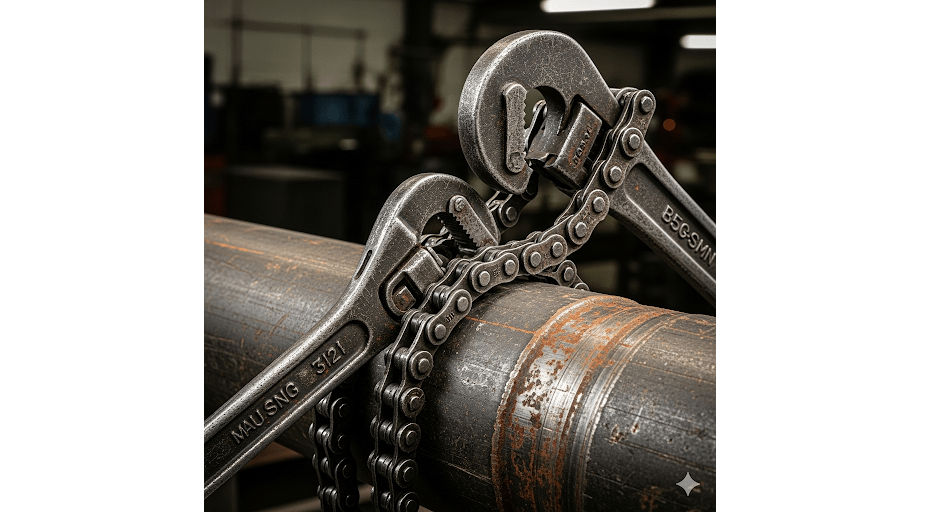
Chain Pipe Wrenches
Strategic Recommendations for Chain Pipe Wrenches
- Begin BIS Certification Immediately
Large & Medium enterprises must comply by 1 October 2026, Small enterprises by 1 January 2027, and Micro enterprises by 1 April 2027.
Early certification minimizes compliance risk and avoids last-minute operational disruptions. - Consult (ERA) Compliance Professionals
Partner with ERA Compliance Team for BIS application filing, product testing coordination, ISI marking approval, and QCO documentation.
Expert support ensures faster approvals and full regulatory alignment. - Reach Out for Support
📧 cs@eraglobal.co.in 📞 +91 9599296331 💬 WhatsApp Support Available
Easy contact for documentation assistance, filings, lab coordination, and certification timelines. - Track QCO Notifications & Updates
Regularly monitor Gazette notifications and BIS updates for amendments or clarifications.
Subscribe to ERA Newsletter to stay informed on regulatory developments and enforcement updates. - Ensure ISI Marking & Declarations
Ensure all chain pipe wrenches sold domestically carry the ISI mark as prescribed.
Export-only products must be clearly declared and segregated to maintain exemption eligibility.
| Section | Details |
|---|---|
| Product Name | Chain Pipe Wrenches |
| Applicable Indian Standard (IS) No. | IS 4123:1982 |
| Title of Indian Standard | Chain Pipe Wrenches – Specification |
| Quality Control Order | Hand Tools (Quality Control) Order, 2024 |
| Notification & Amendments | Notified vide S.O. 5596(E) dated 4 December 2025, superseding Hand Tools (Quality Control) Order, 2024 |
| Final Enforcement Date | Large & Medium Enterprises: 1 October 2026; Small Enterprises: 1 January 2027; Micro Enterprises: 1 April 2027 |
| Objective & Scope | To ensure quality, safety, and uniform standards for chain pipe wrenches through mandatory BIS certification |
| Products Covered | Chain pipe wrenches used for gripping and turning pipes in plumbing and industrial applications |
| Exemptions | Goods manufactured domestically for export only; limited imports for R&D (up to 200 units per year) |
| Industries Impacted | Hand tool manufacturers, plumbing & pipe fitting industry, oil & gas sector, hardware and industrial tool traders |
| Mandatory Compliance | Conformity to IS 4123:1982, BIS licence under Scheme-I, and compulsory ISI marking |
| Next Steps for Stakeholders | Apply for BIS licence, conduct testing, update ISI marking, segregate export stock |
| Legal Framework Provision & Enforcement | Enforced under the Bureau of Indian Standards Act, 2016 by the Bureau of Indian Standards (BIS) |
| Penalties | Seizure of goods, cancellation of BIS licence, monetary fines, or imprisonment up to 2 years, or both |
| Conclusion | BIS certification for chain pipe wrenches is mandatory from October 2026 onwards based on enterprise size |
| References/Annexures | Hand Tools (Quality Control) Order, 2025 – S.O. 5596(E), Gazette of India |
Ready to start your certification journey?
Let us help you navigate regulatory challenges and achieve certification with ease. Leave us your details, and we’ll get back to you—or request a free consultation today.
Get in touch with us today
Notification
Chain Pipe Wrenches have been formally notified under the Hand Tools (Quality Control) Order, 2025, issued by the Ministry of Commerce & Industry (DPIIT) in exercise of powers under Section 16 of the Bureau of Indian Standards Act, 2016.
This notification legally brings chain pipe wrenches within the ambit of compulsory BIS certification, making compliance a statutory requirement before manufacture, import, or sale in the Indian market.
Enforcement Timeline
The Order follows a phased enforcement approach to ensure smooth industry transition.
Compliance becomes mandatory from 1 October 2026 for large and medium enterprises, 1 January 2027 for small enterprises, and 1 April 2027 for micro enterprises, allowing MSMEs additional time for regulatory preparedness.
Overview
Chain pipe wrenches are critical hand tools widely used for gripping and rotating pipes in plumbing, infrastructure projects, oil & gas installations, and industrial maintenance operations.
Given their direct impact on operational safety and performance, regulatory standardization is essential to prevent failures arising from poor material strength or inferior workmanship.
Objective & Scope
The primary objective of the Quality Control Order is to ensure that chain pipe wrenches manufactured or sold in India meet minimum quality and safety benchmarks as prescribed under IS 4123:1982.
The scope of the regulation covers domestic manufacturers, importers, and sellers, ensuring uniform compliance across the supply chain.
Products Covered
All chain pipe wrenches intended for sale or distribution within India are covered under this Order.
The requirement applies irrespective of whether the product is manufactured domestically or imported, provided it is placed in the Indian market.
Exemptions Provided
The Order provides a clear exemption for goods manufactured domestically exclusively for export, recognizing international trade requirements.
Additionally, manufacturers are permitted to import up to 200 units per year for research and development purposes, subject to non-commercial use and proper record maintenance.
Industries Impacted
The regulation directly impacts hand tool manufacturers and importers, plumbing and pipe fitting industries, oil & gas equipment suppliers, infrastructure contractors, and hardware traders.
Any entity dealing in uncertified chain pipe wrenches after the enforcement date may face regulatory action.
Mandatory Compliance Requirements
Manufacturers and importers must obtain a BIS licence under Scheme-I of the BIS (Conformity Assessment) Regulations, 2018.
Each compliant chain pipe wrench must bear the ISI Mark, signifying adherence to IS 4123:1982 and approval by the Bureau of Indian Standards.
Next Steps for Stakeholders
Stakeholders should immediately initiate BIS certification procedures, including product testing at BIS-recognized laboratories and preparation of technical documentation.
Internal quality systems, labeling, and packaging processes should be aligned well in advance of the enforcement deadlines.
Legal Provisions, Enforcement & Penalties
The Bureau of Indian Standards (BIS) is designated as the certification and enforcement authority under this Order.
Non-compliance with the provisions may result in penalties under the BIS Act, 2016, including fines, seizure of goods, cancellation of licence, or imprisonment.
Conclusion
From October 2026 onwards, BIS certification becomes mandatory for chain pipe wrenches sold in India, with staggered timelines for MSMEs.
The regulation strengthens consumer safety, promotes product reliability, and enhances overall quality standards in the hand tools sector.
Ready to start your certification journey?
Let us help you navigate regulatory challenges and achieve certification with ease. Leave us your details, and we’ll get back to you—or request a free consultation today.